

 English
 Deutsch
 简体中文

Author: FTM
Date: Nov 12, 2026
How Do Forges Work? A Practical Guide to Forging Processes and Metal Parts
A forge is simple in principle and demanding in practice. You heat metal until it becomes easier to shape, then apply controlled force so the metal fills a die, stretches under a hammer, or moves between rolls. The word “forge” can mean the hearth in a small blacksmith shop or the whole industrial line: furnace, robot, press, die, trim press, heat-treat oven, and inspection bench. In both cases, the goal is the same: use heat and pressure to turn a solid billet into a stronger, better-shaped part.
That basic idea explains why forged parts appear where failure is expensive: steering and suspension components, agricultural gear drives, mining wear parts, rail fittings, valve parts, and hydraulic shafts. The process is not just bending metal into shape. It changes the metal’s internal structure, and that is often the real reason engineers specify a forging.
How a basic forging operation works
Every forge shop has its own rhythm, but the sequence is usually familiar. The details change with the alloy, part size, and production volume, yet the logic stays consistent:
- Material selection and cutting. A bar or billet is chosen for its chemistry and consistency, then cut to a controlled weight. Too much metal wastes material; too little metal leaves the die cavity incomplete.
- Heating and soaking. The billet goes into a furnace and is brought to a target temperature range. Soaking matters because the center of the metal must be ready, not just the surface.
- Transfer and initial shaping. The hot billet is moved to a hammer or press. The first blows or strokes rough out the shape and distribute metal toward the die impressions.
- Finishing in the die. The final impression controls thickness, radii, ribs, bosses, and draft angles. Excess material escapes as flash, which is later trimmed away.
- Trimming and cooling. The flashed part is trimmed, then cooled under conditions that suit the alloy. Some parts go straight to heat treatment; others are inspected or straightened first.
- Heat treatment. Annealing, normalizing, quenching, and tempering can adjust hardness, toughness, and machinability. This step is selected for the part’s service conditions, not added by habit.
- Machining and inspection. Forging usually creates the near-net shape. CNC machining then brings critical surfaces, holes, threads, and bores to final tolerance. Inspection closes the loop with dimensions, hardness, and, when required, non-destructive testing.
A well-run forge treats each step as connected. A perfect die cannot compensate for a cold billet, and a good furnace cannot fix a poorly designed preform. That is why experienced operators watch the whole line, not just the press.
Open die, closed die, and other forging methods
Forges are often described by their tooling. The main difference is how much the die controls the final shape and how the force is applied.
Open die forging
In open die forging, flat or simple-shaped dies work the metal between them. The operator rotates and repositions the workpiece to reduce thickness, draw out length, or upset a section. It is flexible and well suited to large shafts, rings, blocks, and low-volume work. The trade-off is that open die forging leaves more machining allowance and depends heavily on operator skill.
Closed die forging
Closed die forging, also called impression die forging, uses shaped dies that contain the desired form. When the press closes, the metal is forced into the cavity. This method gives repeatable geometry, better grain flow, and less machining for production parts. It is common for flanges, gears, levers, brackets, and automotive or machinery components.
 Custom Die Forged Flange for Forging ProjectsCustom die-forged flange for projects needing repeatable geometry and grain flow, with machining to finish sealing faces and bolt holes.View Product →
A die-forged flange is a useful example: the forging creates the basic mass and direction of grain flow, while later machining finishes the sealing faces and bolt holes. The process choice affects both strength and cost.
Cold, warm, and hot forging
Temperature changes the rules. Hot forging improves formability and allows large shape changes, but it requires scale control and predictable cooling. Warm forging sits between hot and cold, offering better surface quality than hot forging with less force than cold work. Cold forging gives tight tolerances and good surface finish, but the metal resists deformation more, so tooling and lubrication must be carefully matched to the job.
 Custom Forging Steel Shaft for Machined ComponentsCustom forging steel shaft for a product line where favorable axial grain flow and later machining support reliable shaft production.View Product →
Shafts show why the method matters. A forged shaft can be produced with a favorable grain direction along the axis, then machined for bearing seats and couplings. The forge does not finish the part alone; it creates the right starting condition for reliable machining and service.
Heat, force, and tooling: the parts that make a forge work
Walk through a forge shop and you will see more than a hammer. A working forge is a system of heat, force, and control:
- Furnaces and heating controls bring metal to the right temperature without overheating or uneven soaking.
- Hammers and presses deliver the energy. Hammers work by impact; presses apply a slower squeezing force.
- Dies and tooling determine the shape, draft, radii, and material flow. Die wear is monitored because it directly affects dimensions.
- Lubrication and cooling reduce friction, help release the part, and protect tooling from thermal fatigue.
- Handling equipment moves hot billets safely and keeps cycle times consistent.
- Control systems and records track temperatures, stroke data, and part identity so problems can be traced.
The best forge shops are quietly disciplined. They check billet heat, die condition, and part dimensions in a routine way. That consistency is what turns a powerful press into a dependable production process.
Why forging changes the metal
Forging does more than create a shape. As the metal deforms, its internal grain structure flows with the part geometry. Instead of cutting through that flow, the forging process encourages it to follow the load paths. The result can be better toughness, improved fatigue resistance, and fewer internal discontinuities than a comparable machined or cast shape.
This does not happen by magic. The benefit depends on proper reduction, temperature control, and a sound die design. A forging with poor flow lines or internal defects will not perform simply because it was forged. That is why process discipline and inspection are part of the answer to how forges work.
Forges versus foundries: a quick comparison
Forges and foundries are often compared because both create metal parts, but they start from different physical states. A foundry melts metal and pours it into a mold. A forge heats solid metal and shapes it under force. Neither process is universally better; the part, material, volume, and loading conditions decide the fit.
| Question | Forging | Casting |
|---|---|---|
| Starting condition | Solid billet, bar, or ingot | Molten metal poured into a mold |
| Shape control | Dies, hammers, presses, and preforms | Pattern, mold, and gating system |
| Typical strength advantage | Good grain flow and toughness under impact | Design flexibility and complex internal passages |
| Best fit | Load-bearing parts, shafts, gears, flanges, wear parts | Complex housings, thin walls, large cavities, low-stress shapes |
| Machining allowance | Usually moderate for closed die, higher for open die | Dependent on process and tolerance requirements |
In practice, the decision often comes down to where the stress travels, how many parts are needed, and how much finishing the part can tolerate. A good supplier will discuss those points openly rather than force every part into one process.
What forges make in real industrial settings
Forged parts are common in equipment that works hard and stays in service for years. Agricultural machines use forged gears, shafts, and linkage parts. Mining and construction equipment rely on forged wear and load-bearing components. Railway systems use forged and cast parts in braking, coupling, and structural applications. Valve and pump makers use forged blanks for bodies, stems, and pressure-retaining parts.
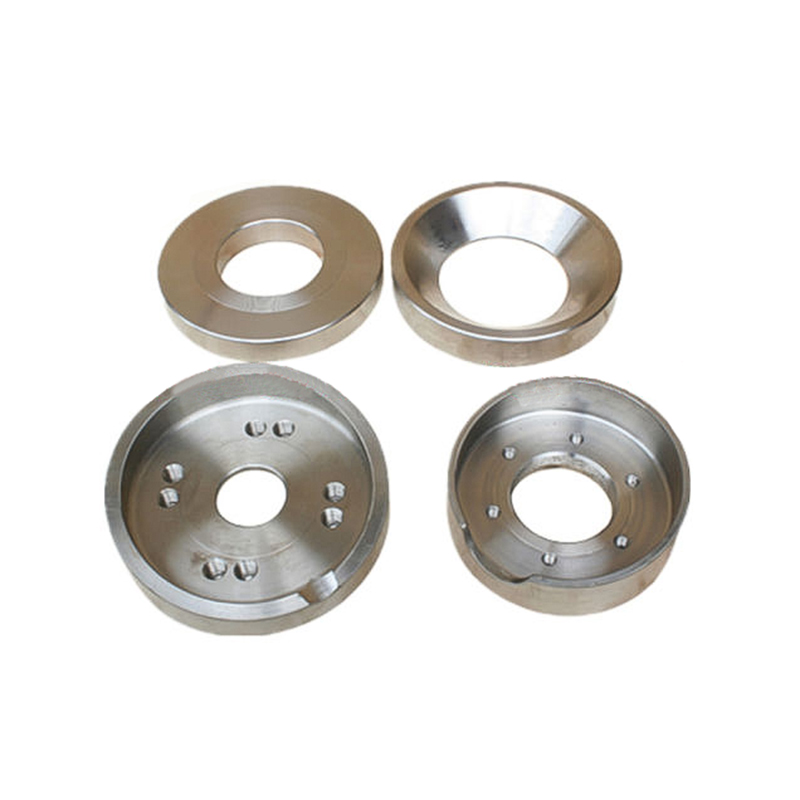 Closed Die Forging Gear for Farm MachineryCustom closed die forged gear for farm machinery, positioned where forging, heat treatment, machining, and inspection connect in the production route.View Product →
A closed die forging for farm machinery is a good reminder that the process is rarely standalone. The forging creates a sound, grain-oriented blank; heat treatment develops the required properties; machining produces the final gear geometry; and inspection confirms the result. If you would like to see how those steps connect in our own workflow, our craft manufacturing overview explains the path from drawing to finished part.
Quality checks that keep forged parts reliable
Because forged parts often carry safety or durability requirements, quality control starts before the first stroke. Material certificates are checked against the drawing. Furnace temperatures are monitored. Die wear is measured and corrected. Operators inspect dimensions at set intervals, not only at the end of the run.
- Chemical composition and incoming material verification
- Heating temperature and soaking time records
- Die setup, wear checks, and first-piece approval
- Dimensional inspection and surface defect checks
- Hardness, microstructure, and mechanical testing when required
- Non-destructive testing for critical applications
- Traceability from heat number to finished lot
At our shop, the quality system is built around ISO 9001 principles, and the practical aim is straightforward: make the process repeatable, record what happened, and catch drift before it becomes a batch problem.
How to choose the right forging approach for a part
The right forging method is the one that delivers the required properties at a sensible total cost. A few questions usually narrow the field quickly:
- What is the service load? Impact, fatigue, bending, and pressure each point toward different material and process choices.
- How complex is the shape? Deep ribs, thin sections, and tight radii may need closed die forging, while simple heavy sections may suit open die work.
- What is the annual volume? Higher volumes can justify dedicated dies and automated handling; lower volumes may favor flexible tooling.
- How much machining is acceptable? Near-net forging can reduce cutting time, but the forging cost and die life must balance against the savings.
- What heat treatment and testing are required? These steps affect both lead time and final performance.
Bring the drawing, material specification, and expected load to the conversation early. That gives the forge shop room to suggest a preform, die layout, or machining allowance that saves cost without weakening the part. If you have a project in mind, you can contact our team to discuss the forging route, material, and finishing steps.
Final thoughts
Forges work by combining heat, force, and tooling in a controlled sequence. The metal is brought to a workable temperature, shaped while it flows, trimmed, heat treated, machined, and inspected. The best results come from treating those steps as one process rather than separate operations. That is how a simple principle, hot metal under pressure, becomes dependable industrial parts that hold up in the field.
Selected Bearing Display

Contact Information
- Tel:+86-574-88067800/88067900
- Fax:+86-574-88067400
- Phone:+86-13967874638
- E-Mail:master@nbyifei.com
Products Links
Products Links
- Agricultural Machinery Casting Parts
- Auto Casting Parts
- Brass Die Casting Parts
- Casting Bucket Tooth And Accessory
- Container Casting Parts
- Investment Casting Parts
- Machinery Casting Parts
- Mining Machinery Casting Parts
- Railway And Train Casting Parts
- Sand Casting Parts
- Stamping & Forging Parts
- Valve Casting Parts
Contact Us
Copyright ©
Ningbo Hansheng Machinery Parts Co.,Ltd. All Rights Reserved
 Custom Die Castings Manufacturers
