

 English
 Deutsch
 简体中文
简体中文
Author: FTM
Date: Mar 11, 2026
Brass Die Casting Parts: A Complete Guide
Brass die casting produces dimensionally precise, corrosion-resistant metal parts by injecting molten brass alloy into a hardened steel mold under high pressure. The result is a near-net-shape component with excellent surface finish, tight tolerances, and good mechanical strength — all achieved in high volumes with minimal secondary machining. Brass die casting is the preferred manufacturing method when a part must combine conductivity, corrosion resistance, machinability, and an attractive appearance in a single production step.
This guide covers everything engineers and buyers need to know: the alloys used, how the process works, achievable specifications, common applications, design rules, finishing options, and how to evaluate suppliers.
What Makes Brass Suitable for Die Casting
Not all metals are well suited to die casting. Brass qualifies because of a specific combination of physical and chemical properties that make it behave predictably under high-pressure injection conditions and deliver reliable performance in the finished part.
- Moderate melting range: Most brass alloys used in die casting melt between 900°C and 940°C (1,650°F–1,724°F), which is manageable for steel tooling without causing rapid die erosion.
- Excellent fluidity: Molten brass flows readily into fine features and thin walls, enabling complex geometries that would be difficult to achieve with other metals.
- Low porosity: Brass alloys optimized for die casting produce dense, low-porosity parts suitable for pressure-tight applications such as plumbing valves and fittings.
- Natural corrosion resistance: Brass resists oxidation, moisture, and many chemicals without surface treatment, reducing finishing requirements.
- Electrical and thermal conductivity: Brass conducts electricity and heat effectively, making it valuable in electrical connectors and heat-dissipating components.
- Machinability: Post-cast machining of brass is straightforward, allowing tight-tolerance features like threads and bores to be added efficiently after casting.
Common Brass Alloys Used in Die Casting
The term "brass" covers a wide family of copper-zinc alloys. For die casting, lead content is a key differentiator because lead dramatically improves machinability and lubricity during casting. The shift toward lead-free alloys for potable water applications has driven development of alternative formulations using bismuth and silicon.
| Alloy | Composition (approx.) | Key Characteristics | Typical Applications |
|---|---|---|---|
| C85700 (Leaded Yellow Brass) | Cu 58–64%, Zn balance, Pb 0.8–1.5% | Excellent machinability, good castability | Hardware, decorative fittings |
| C36000 (Free-Cutting Brass) | Cu 61.5%, Pb 3%, Zn balance | Highest machinability rating, easy to machine post-cast | Precision components, connectors |
| C89550 (Bi-Brass, Lead-Free) | Cu 56–60%, Bi 0.8–1.4%, Zn balance | Lead-free, NSF 61 compliant for potable water | Plumbing valves, faucets |
| Silicon Brass (e.g., C87850) | Cu 57%, Si 3%, Zn balance | Lead-free, good corrosion resistance, dezincification resistant | Water meters, marine fittings |
| Dezincification-Resistant Brass (DZR) | Cu 62–64%, Zn balance, As 0.02–0.15% | Resists dezincification in aggressive water | WRAS-approved plumbing components |
The Brass Die Casting Process Step by Step
Brass die casting uses the hot-chamber or, more commonly for brass, the cold-chamber die casting process because brass's higher melting temperature would corrode the submerged injection components used in hot-chamber machines. Here is how the process unfolds from raw material to finished part:
- Mold preparation: The two-part hardened H13 steel die is cleaned, inspected, and sprayed with a release agent to prevent sticking and extend die life. Dies are then clamped shut under tonnage appropriate to the projected area of the part.
- Melting: Brass alloy ingots or returns are loaded into a separate holding furnace and melted to the target pour temperature — typically 950°C to 980°C (1,742°F–1,796°F) for most die casting alloys.
- Ladling: A measured shot of molten brass is ladled from the furnace into the cold-chamber shot sleeve, which is located outside the furnace.
- Injection: A hydraulic plunger drives the molten brass into the die cavity at high velocity — typically 10 to 50 meters per second — filling the cavity in milliseconds. Injection pressure commonly ranges from 7 to 35 MPa (1,000 to 5,000 psi).
- Solidification: The brass solidifies rapidly under continued pressure. Cycle times for small parts range from 30 to 120 seconds, depending on part weight and wall thickness.
- Ejection: The die opens and ejector pins push the solidified casting out of the die cavity. The part, runner, and overflow biscuit are ejected as a single assembly.
- Trimming: Gates, runners, and flash are removed by trimming dies, manual cutting, or CNC machining.
- Secondary operations: Depending on the application, parts proceed to CNC machining (for threads, bores, or tight tolerances), surface finishing, or assembly.
Achievable Specifications and Tolerances
One of the primary reasons engineers choose brass die casting over sand casting or investment casting is dimensional consistency. Die casting molds are rigid and repeatable, enabling tight tolerances across high-volume runs without re-inspection of every part.
| Specification | Typical Value | With Secondary Machining |
|---|---|---|
| Linear tolerance (as-cast) | ±0.1 to ±0.3 mm | ±0.01 to ±0.05 mm |
| Minimum wall thickness | 0.8 to 1.5 mm | N/A |
| Surface roughness (Ra) | 0.8 to 3.2 µm | 0.2 to 0.8 µm |
| Draft angle (typical) | 0.5° to 2° | N/A |
| Part weight range | 5 g to 5 kg | N/A |
| Production volume (economical) | 500 to 1,000,000+ units | N/A |
Industries and Applications That Use Brass Die Cast Parts
Brass die casting parts appear in a remarkably wide range of industries, driven by the material's combination of properties that few other metals can match simultaneously.
Plumbing and Water Systems
The largest single application sector. Brass die cast valves, fittings, manifolds, ball valves, gate valves, and pipe connectors are used in residential, commercial, and industrial plumbing worldwide. Lead-free alloys such as C89550 and silicon brass meet NSF/ANSI 61 requirements for potable water contact. Brass valves routinely operate at pressures up to 600 psi (41 bar) in commercial systems.
Electrical and Electronics
Brass's electrical conductivity (approximately 28% IACS) makes it suitable for connectors, terminal blocks, relay housings, switch components, and plug bodies. Die cast brass contacts and connectors maintain dimensional stability over years of thermal cycling and mechanical mating, unlike plastic alternatives.
Automotive and Transportation
Brass die casting produces fuel system components, heat exchanger end caps, sensor housings, hydraulic fittings, and decorative trim elements. The material's resistance to fuel, oil, and coolant fluids at elevated temperatures makes it a reliable choice in underhood environments operating at up to 150°C (302°F).
Locks, Hardware, and Security
Lock cylinders, key blanks, handle escutcheons, hinges, and cam locks are widely produced in brass die casting. The material's machinability allows precision keyway profiles to be cut after casting, and its appearance — particularly after polishing or plating — suits architectural hardware applications.
Gas Equipment and Industrial Controls
Gas valves, regulators, and meter bodies are frequently cast in brass because of its compatibility with natural gas, propane, and industrial gases. Die cast brass provides the leak-tight integrity required in pressurized gas systems — a property that sand castings often cannot reliably achieve at competitive cost.
Design Guidelines for Brass Die Cast Parts
Good part design is the single most important factor in achieving low-cost, high-quality brass die castings. Parts designed without consideration for die casting constraints result in tooling problems, porosity, dimensional variation, and excessive scrap rates. Follow these principles from the start of the design phase:
Wall Thickness
Maintain uniform wall thickness of 1.5 mm to 4 mm wherever possible. Abrupt transitions between thick and thin sections create shrinkage porosity as the metal solidifies at different rates. Where section changes are unavoidable, taper the transition over at least a 3:1 length-to-thickness ratio.
Draft Angles
All surfaces parallel to the direction of die pull must include draft. A minimum of 0.5° on machined surfaces and 1° to 2° on as-cast surfaces prevents the part from binding in the die during ejection. Insufficient draft causes surface tearing, die damage, and ejection failures.
Radii and Fillets
Sharp internal corners concentrate stress in the die and create turbulence in the metal flow that promotes porosity. Use a minimum internal fillet radius of 0.5 mm, and prefer 1 mm or larger where structural loads are present. External corners can be sharp where appearance requires, but internal transitions should always be radiused.
Undercuts and Side Actions
Features that prevent straight ejection from the die — such as holes perpendicular to the draw direction, external undercuts, or threads — require side actions (also called slides or cores) in the die. These add significant tooling cost, typically $1,500 to $5,000 per slide, and increase cycle time. Minimize undercuts in the design or orient them to coincide with the parting line wherever possible.
Bosses and Ribs
Bosses (raised cylindrical features for fasteners) and ribs (thin wall features for stiffness) should have a base thickness no greater than 60% of the adjacent wall to prevent sink marks on the opposite surface. Boss heights should not exceed five times the boss diameter without additional structural support.
Surface Finishing Options for Brass Die Cast Parts
As-cast brass surfaces have a matte golden appearance with a roughness of Ra 0.8 to 3.2 µm. Depending on the application, a range of finishing processes can enhance appearance, protect against tarnishing, or add functional surface properties:
- Polishing and buffing: Mechanical polishing achieves a mirror finish (Ra below 0.1 µm) suitable for decorative hardware and plating preparation. Vibratory finishing is used for bulk processing of small parts.
- Electroplating: Nickel, chrome, gold, and tin plating are commonly applied over brass. Nickel undercoat is standard before chrome or gold plating. Chrome plating on brass fittings provides both corrosion protection and a premium appearance for architectural hardware.
- Powder coating: Applied over brass for color and additional corrosion protection in outdoor or industrial environments. Requires a thorough degreasing and surface preparation stage for adhesion.
- Chemical blackening (patination): Darkens the brass surface through controlled oxidation, producing an antique or aged appearance. Common in architectural and lighting hardware.
- Lacquering: Clear lacquer seals the natural brass surface to prevent tarnishing without altering appearance. Widely used on decorative parts where the natural brass color is the desired aesthetic.
- Passivation and acid washing: Removes surface oxides and contaminants to restore uniform color after machining or assembly operations.
Brass Die Casting vs. Other Manufacturing Processes
Understanding where brass die casting sits relative to alternative processes helps engineers make the right choice for a given part and volume:
| Process | Tooling Cost | Tolerance | Best Volume | Complexity |
|---|---|---|---|---|
| Brass Die Casting | High ($5K–$50K+) | ±0.1–0.3 mm | 500–1,000,000+ | High |
| Sand Casting | Low ($500–$5K) | ±0.5–2.0 mm | 1–500 | Moderate |
| Investment Casting | Medium ($2K–$15K) | ±0.1–0.2 mm | 100–10,000 | Very High |
| CNC Machining from Bar | Low (programming only) | ±0.01–0.05 mm | 1–500 | Low–Moderate |
| Forging + Machining | High ($10K–$80K) | ±0.05–0.2 mm | 5,000–500,000 | Low–Moderate |
Tooling Costs and What Affects Die Life
Die tooling is the largest upfront investment in brass die casting. A single-cavity tool for a simple part may cost $5,000 to $15,000, while a multi-cavity tool for a complex part with slides and cores can exceed $50,000 to $80,000. Understanding the factors that drive tooling cost and die life helps buyers budget accurately and avoid surprises.
- Part complexity: Every undercut, side action, threaded core, or deep cavity adds machining time and assembly to the tool. Complex parts can require 4 to 8 weeks of tool manufacturing time.
- Number of cavities: Multi-cavity tools produce 2, 4, 8, or more parts per shot, reducing per-part cost at higher volumes but increasing tool cost proportionally.
- Die life: Brass's higher casting temperature compared to zinc or aluminum accelerates die wear. A well-maintained brass die cast tool typically achieves 150,000 to 300,000 shots, compared to 500,000+ for zinc alloy dies. Regular maintenance, die coating (nitriding), and controlled operating temperatures extend die life significantly.
- Tool steel selection: H13 hot work tool steel is the standard for brass die casting. Premium grades with higher vanadium content offer improved heat checking resistance but add 15 to 25% to material cost.
How to Evaluate and Select a Brass Die Casting Supplier
Supplier selection has a direct impact on part quality, lead time, and total cost. Use these criteria to evaluate potential brass die casting partners:
- Certifications: ISO 9001:2015 certification is the baseline quality management requirement. For plumbing parts, check NSF 61 or WRAS approval. For automotive parts, IATF 16949 certification indicates the supplier has automotive-grade quality systems in place.
- In-house tooling capability: Suppliers with their own tool rooms can respond faster to design changes and troubleshoot tool issues without relying on third parties. Ask whether the supplier designs and builds dies in-house or outsources tooling.
- Metallurgical testing: A qualified supplier performs incoming material chemical analysis and can provide certifications of conformance for each alloy heat lot. Ask for spectroscopy (OES) test reports as standard documentation.
- Dimensional inspection equipment: CMM (coordinate measuring machine) capability is essential for first-article inspection of complex parts. Confirm the supplier can measure the critical dimensions specified in your drawing.
- Secondary operation capability: If your part requires CNC machining, plating, or pressure testing, a supplier with these capabilities in-house simplifies logistics and quality accountability.
- Sample lead time and prototyping: Request the supplier's standard lead time from tooling approval to first article samples. For new tools, 4 to 8 weeks is typical; suppliers quoting significantly shorter times may be using unproven shortcuts.
- Minimum order quantities (MOQ): Die casting economics favor volume. Clarify MOQ early — many suppliers require 500 to 2,000 pieces minimum per production run to justify setup costs.
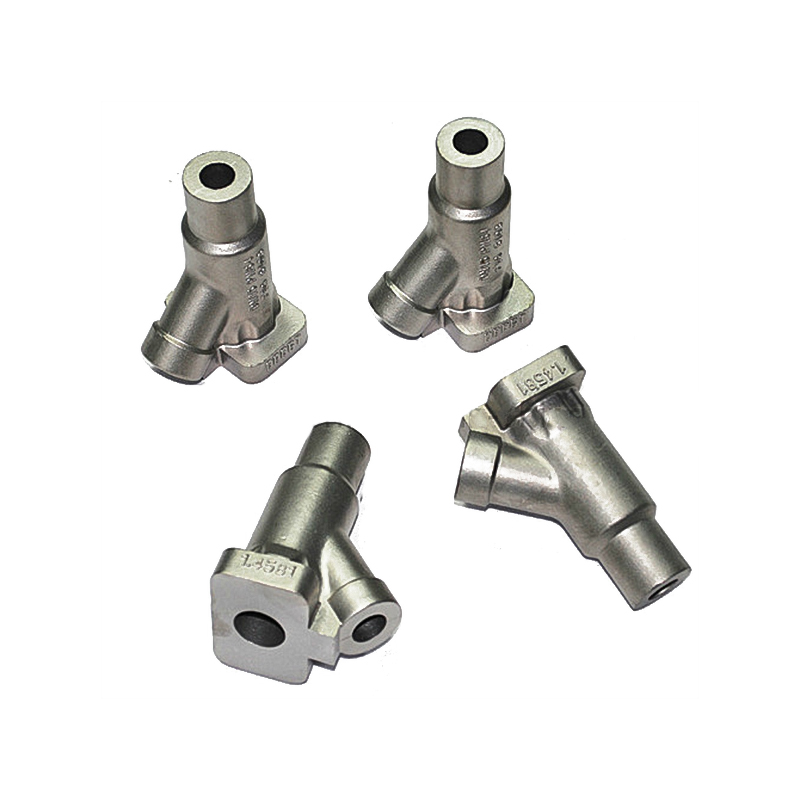
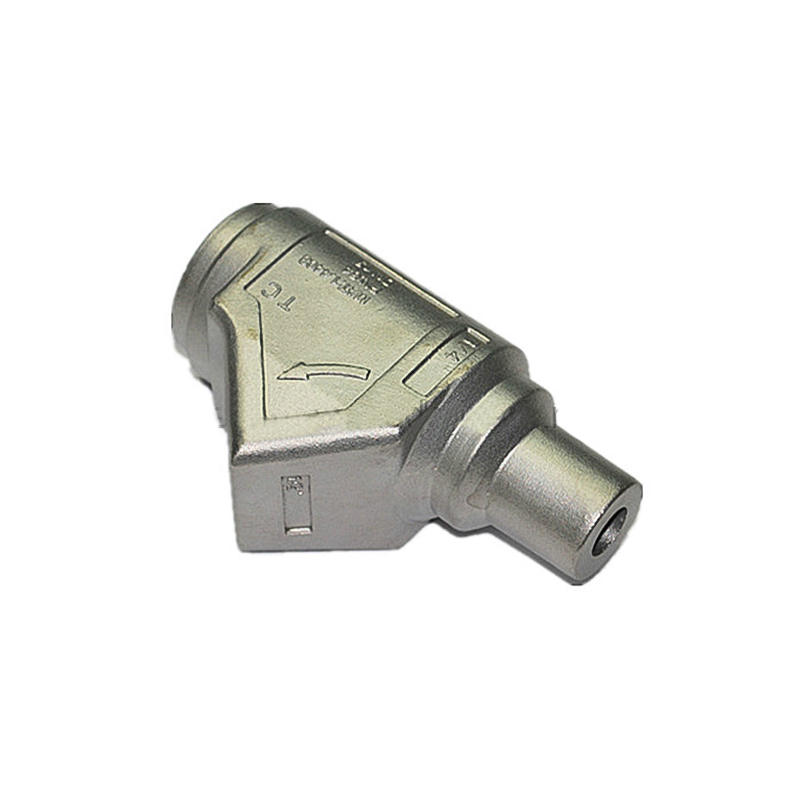
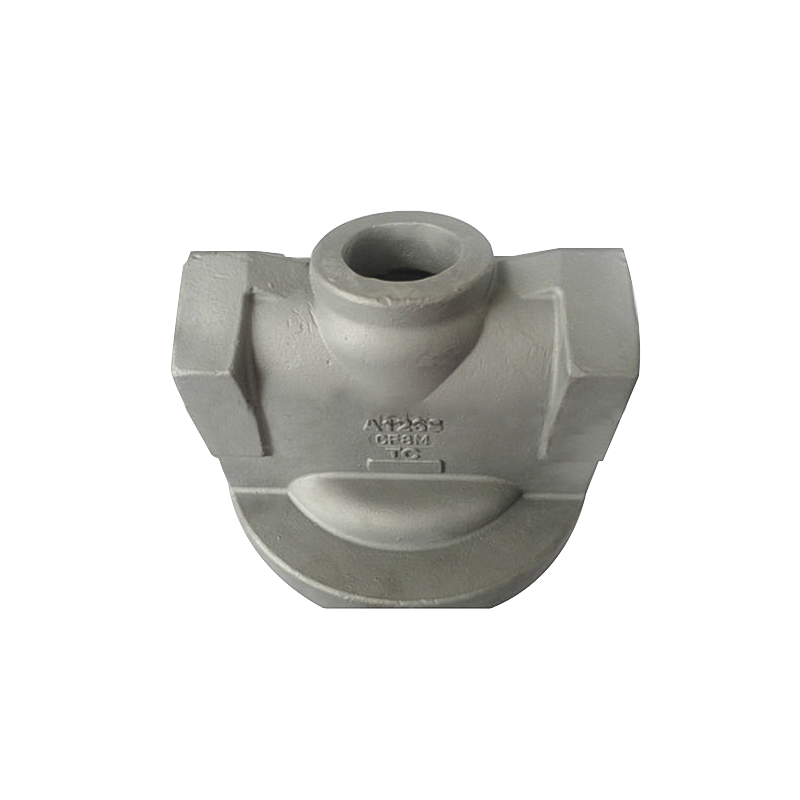
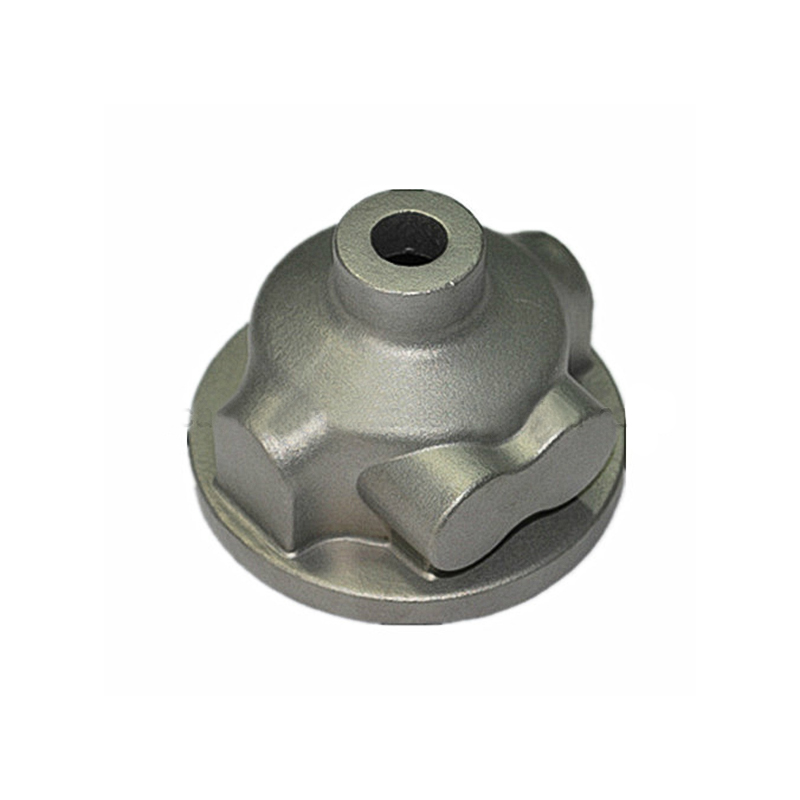
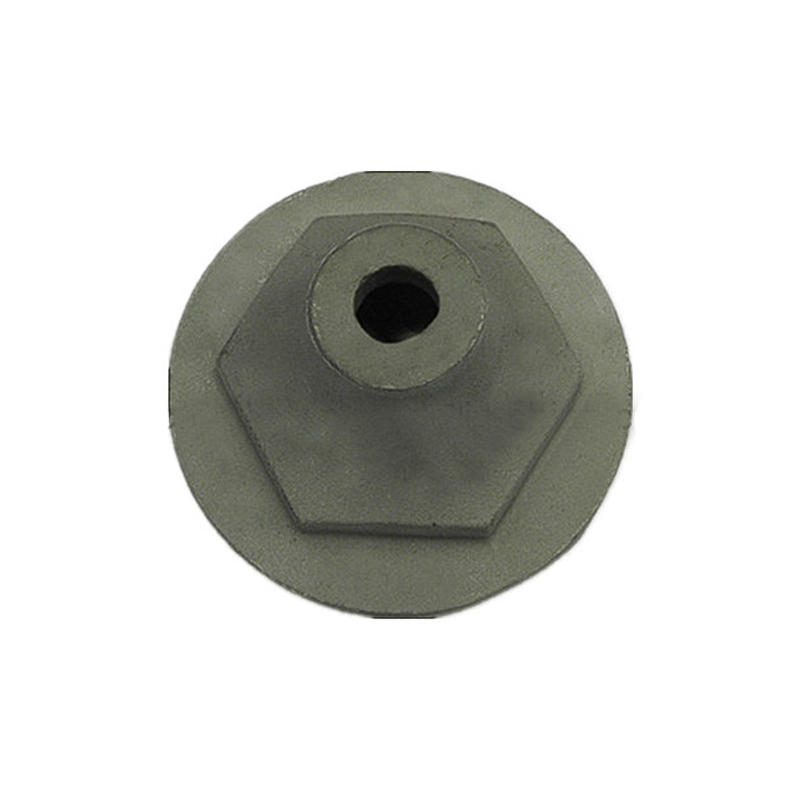
Selected Bearing Display

Contact Information
- Tel:+86-574-88067800/88067900
- Fax:+86-574-88067400
- Phone:+86-13967874638
- E-Mail:master@nbyifei.com
Products Links
Products Links
- Agricultural Machinery Casting Parts
- Auto Casting Parts
- Brass Die Casting Parts
- Casting Bucket Tooth And Accessory
- Container Casting Parts
- Investment Casting Parts
- Machinery Casting Parts
- Mining Machinery Casting Parts
- Railway And Train Casting Parts
- Sand Casting Parts
- Stamping & Forging Parts
- Valve Casting Parts
Contact Us
Copyright ©
Ningbo Hansheng Machinery Parts Co.,Ltd. All Rights Reserved
 Custom Die Castings Manufacturers
