

 English
 Deutsch
 简体中文
简体中文
Author: FTM
Date: Apr 08, 2026
Die Casting vs. Sand Casting: Which Process Is Right for You?
Die casting is best for high-volume, tight-tolerance metal parts; sand casting is better for large, complex, or low-volume parts at lower tooling cost. The two processes differ fundamentally in mold material, cycle time, achievable precision, and suitable alloys. Choosing the wrong process can inflate per-unit cost by 300–500% or result in parts that fail dimensional requirements. This guide breaks down every critical factor so engineers and procurement teams can make a data-driven decision.
How Each Process Works
Die Casting
In die casting, molten metal is injected into a hardened steel mold (the "die") under high pressure—typically 1,500 to 25,000 psi. The die is permanent and can be reused for hundreds of thousands of cycles. There are two main variants:
- Hot-chamber die casting: The injection system is submerged in molten metal. Used for low-melting-point alloys like zinc and magnesium. Cycle times as fast as 15–20 shots per minute.
- Cold-chamber die casting: Molten metal is ladled into the injection chamber separately. Required for aluminum and copper alloys. Slightly slower but handles higher-temperature materials.
Sand Casting
Sand casting uses a mold made from compacted sand (typically silica sand bonded with clay or chemical binders) formed around a pattern of the desired part. The mold is destroyed after each pour to remove the casting. The process involves:
- Creating a pattern (wood, metal, or plastic) in the shape of the final part
- Packing sand around the pattern in a two-part flask (cope and drag)
- Removing the pattern, adding cores if needed, and closing the mold
- Pouring molten metal and allowing it to solidify
- Breaking the sand mold and cleaning the casting
Sand casting is one of the oldest manufacturing processes in existence, dating back over 3,000 years, and it remains the most widely used casting method globally by tonnage.
Die Casting vs. Sand Casting: Head-to-Head Comparison
| Parameter | Die Casting | Sand Casting |
|---|---|---|
| Tooling Cost | $10,000–$100,000+ | $500–$10,000 |
| Per-Unit Cost (high volume) | Very low ($0.50–$5) | Moderate ($5–$50+) |
| Dimensional Tolerance | ±0.1–0.3 mm | ±0.5–1.5 mm |
| Surface Finish (Ra) | 0.8–3.2 µm | 6.3–25 µm |
| Typical Part Weight | 0.01–50 kg | 0.1 kg–several tons |
| Minimum Wall Thickness | 0.5–1.5 mm | 3–5 mm |
| Suitable Metals | Al, Zn, Mg, Cu alloys | Almost any metal, incl. iron & steel |
| Production Volume | 10,000–1,000,000+ units | 1–10,000 units |
| Lead Time (tooling) | 4–12 weeks | 1–4 weeks |
| Porosity Risk | Moderate–High (gas entrapment) | Low–Moderate |
Tooling and Unit Economics: Where Each Process Wins
Tooling cost is the single most decisive factor in process selection. A die casting mold for a mid-complexity aluminum part typically costs $20,000–$60,000, while an equivalent sand casting pattern may cost only $1,000–$3,000. However, the economics invert rapidly at scale.
Consider an aluminum housing part with a per-unit labor and material cost of $4.50 via die casting versus $18 via sand casting. At 5,000 units, the total cost with tooling is roughly $82,500 (die) versus $91,000 (sand)—nearly equal. At 50,000 units, die casting saves over $630,000. The breakeven point for most parts falls between 2,000 and 8,000 units, depending on part complexity and size.
For prototypes, one-off replacements, or annual volumes under 500 units, sand casting almost always delivers better total cost. For volumes above 10,000 units, die casting dominates on economics alone.
Dimensional Accuracy and Surface Finish
Die casting consistently achieves tighter tolerances and better surface finishes than sand casting due to the rigidity of the steel die and the high injection pressure that forces metal into fine features.
- Die casting tolerances: Typically ±0.1 mm for small features; linear tolerances per NADCA standards run approximately ±0.10 mm for the first 25 mm, adding ±0.025 mm per additional 25 mm.
- Sand casting tolerances: Per ISO 8062, CT8–CT12 is typical, meaning tolerances of ±0.5 mm to ±3 mm depending on part size and alloy. Post-machining is often required to hit functional dimensions.
- Surface finish: Die cast parts achieve Ra 1.6–3.2 µm as-cast—often cosmetically acceptable without secondary finishing. Sand cast surfaces range Ra 6.3–25 µm and typically require shot blasting, grinding, or machining for mating surfaces.
For parts that require direct assembly with gaskets, O-rings, or mating flanges—such as valve bodies or pump housings—die casting's superior surface finish can eliminate one or two machining operations, saving $2–$8 per part in secondary processing.
Material Compatibility: A Critical Differentiator
Sand casting works with virtually every castable metal, including gray iron, ductile iron, carbon steel, stainless steel, nickel superalloys, and copper-based alloys. This makes it the default choice for high-temperature or high-strength ferrous applications.
Die casting is restricted to non-ferrous alloys with melting points low enough not to erode or thermally shock the steel die. The most common die casting metals are:
- Aluminum alloys (A380, A360, ADC12): Account for roughly 80% of all die castings by volume. Melting point ~660°C. Excellent strength-to-weight ratio.
- Zinc alloys (Zamak 3, Zamak 5): Lowest processing temperature (~385°C), longest die life (up to 1 million shots), ideal for small precision parts.
- Magnesium alloys (AZ91D): Lightest structural metal used in die casting; 33% lighter than aluminum. Common in automotive and electronics.
- Copper alloys (brass, bronze): High strength and corrosion resistance; significantly reduces die life to ~50,000–100,000 shots due to high pour temperatures.
If a part must be made from gray iron, ductile iron, or steel—such as an engine block, differential housing, or large structural bracket—sand casting is often the only viable casting option.
Common Sand Casting Parts Across Industries
Sand casting's flexibility in material, size, and geometry makes it the dominant process for heavy industrial, infrastructure, and large-scale mechanical components. Below are representative sand casting parts by sector:
Automotive and Heavy Equipment
- Engine blocks and cylinder heads: Most gray iron and aluminum engine blocks—including those in commercial trucks—are sand cast due to their large size and complex internal water jacket geometry.
- Differential and transmission housings: Ductile iron housings for heavy trucks and off-road equipment, often weighing 20–80 kg, are sand cast.
- Brake drums and rotors: Gray iron brake drums for commercial vehicles are routinely sand cast in high volumes at low per-part cost.
Pumps, Valves, and Fluid Systems
- Pump casings and impellers: Bronze and ductile iron pump bodies for water treatment, mining, and oil & gas are sand cast to handle large diameters (up to 1,200 mm) and corrosive environments.
- Gate valves and check valves: Flanged valve bodies in cast iron or carbon steel, common in pipeline infrastructure, are produced via sand casting in sizes from DN50 to DN1200.
- Manifolds: Complex internal passage geometry in intake manifolds for large diesel engines is achieved with sand cores that cannot be replicated in die casting.
Industrial Machinery and Infrastructure
- Machine tool bases and frames: Gray iron beds for lathes, milling machines, and presses—sometimes weighing over 5,000 kg—rely on sand casting for vibration damping and cost efficiency.
- Gearboxes and bearing housings: Cast iron or ductile iron housings with complex internal features, produced in low to mid volumes.
- Manhole covers and drainage grates: Produced by the millions globally each year in gray iron via automated sand casting lines.
Aerospace and Defense
- Turbine casings and structural brackets: Nickel superalloy and stainless steel castings for jet engine and gas turbine housings are sand cast or investment cast at low volumes.
- Landing gear components: Large aluminum and steel structural parts that exceed die casting size limits are produced via sand casting with subsequent machining.
Common Die Casting Parts and Their Advantages
Die casting dominates wherever high volumes, thin walls, tight tolerances, and good cosmetic finish are required simultaneously. Representative die casting parts include:
- Automotive transmission and engine components: Aluminum oil pans, timing covers, valve covers, and transmission cases. A single mid-size vehicle may contain 40–60 die cast aluminum parts.
- Consumer electronics enclosures: Magnesium and aluminum die cast chassis for laptops, cameras, and power tools. Apple's MacBook enclosures, for example, use precision aluminum die casting.
- Electrical connectors and housings: Zinc die cast connector bodies achieve wall thicknesses as low as 0.6 mm and tolerances that ensure reliable contact alignment.
- Lock and hardware components: Door handles, lock cylinders, and hinges in zinc alloy are produced at millions of units per year with excellent surface finish for plating.
- EV battery and motor housings: Large structural aluminum die castings—including Tesla's Gigacastings at up to 8,000 tons of clamp force—are replacing multi-piece assemblies.
Porosity, Structural Integrity, and Heat Treatment
One significant limitation of die casting is gas porosity. The high-speed injection of molten metal traps air and gas within the casting, creating internal voids. These pores can reduce fatigue life by up to 20–40% and prevent standard heat treatment (T6) because the trapped gas expands during solution annealing, causing surface blisters.
Solutions include vacuum-assisted die casting (VADC), which reduces porosity by drawing a vacuum in the die cavity before injection, and semi-solid (thixocasting) processes that use partially solidified metal slurry. These methods can reduce porosity to below 0.5% by volume, enabling T6 heat treatment and improving tensile strength by 15–25%.
Sand castings, because they fill at lower velocities under gravity or low pressure, generally have lower entrapped gas porosity. They can be routinely heat treated to improve mechanical properties—a key reason sand cast steel and ductile iron parts are used in structurally critical applications like axle housings and crane hooks.
Design Considerations Specific to Each Process
Die Casting Design Rules
- Draft angles of 0.5°–3° are required on all surfaces parallel to the die draw direction to enable ejection.
- Avoid undercuts where possible; side actions (slides) can add $5,000–$20,000 to tooling cost per feature.
- Uniform wall thickness (ideally 2–4 mm for aluminum) prevents shrinkage defects and warpage.
- Ribs and bosses must follow thickness rules: rib thickness should be 50–70% of the adjacent wall.
Sand Casting Design Rules
- Draft angles are needed but can be as low as 1°–2° for green sand and even less for no-bake processes.
- Internal passages and cavities are created with sand cores—enabling complex geometry such as water jackets, hollow shafts, and branched passages that are impossible in die casting.
- Minimum section thickness is generally 3–5 mm; thinner sections risk misruns where metal solidifies before filling.
- Parting line placement is more flexible in sand casting, reducing design constraints compared to rigid steel dies.
How to Choose: A Practical Decision Framework
Use the following criteria to guide process selection:
| Requirement | Choose Die Casting | Choose Sand Casting |
|---|---|---|
| Annual volume | >10,000 units | <5,000 units |
| Material | Al, Zn, Mg alloys | Iron, steel, bronze, any alloy |
| Part size | Small to medium (<50 kg) | Any size, including multi-ton parts |
| Tolerance requirement | Tight (±0.1–0.3 mm) | Loose to moderate (±0.5–1.5 mm) |
| Internal complexity | Limited (no cores) | High (sand cores enable complex voids) |
| Heat treatment needed | Difficult (porosity risk) | Fully compatible |
| Budget for tooling | High upfront acceptable | Minimal upfront required |
| Time to first part | 4–12 weeks | 1–3 weeks |
In practice, many products use both processes simultaneously: an automotive engine assembly may combine a sand cast gray iron block with die cast aluminum valve covers, timing covers, and oil pans—each process assigned to the parts where it delivers the best cost-performance ratio.
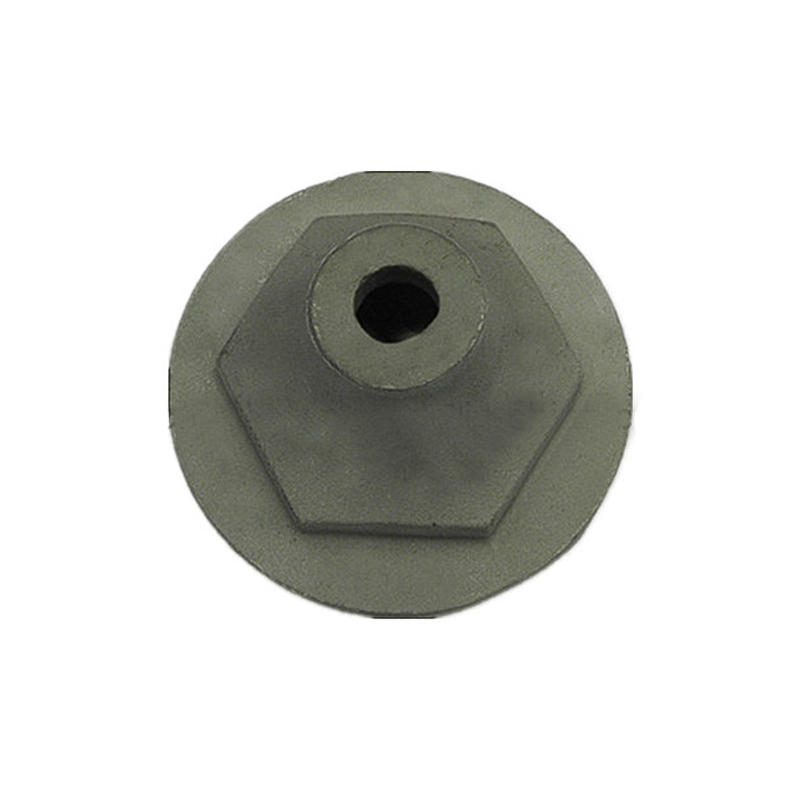
Selected Bearing Display

Contact Information
- Tel:+86-574-88067800/88067900
- Fax:+86-574-88067400
- Phone:+86-13967874638
- E-Mail:master@nbyifei.com
Products Links
Products Links
- Agricultural Machinery Casting Parts
- Auto Casting Parts
- Brass Die Casting Parts
- Casting Bucket Tooth And Accessory
- Container Casting Parts
- Investment Casting Parts
- Machinery Casting Parts
- Mining Machinery Casting Parts
- Railway And Train Casting Parts
- Sand Casting Parts
- Stamping & Forging Parts
- Valve Casting Parts
Contact Us
Copyright ©
Ningbo Hansheng Machinery Parts Co.,Ltd. All Rights Reserved
 Custom Die Castings Manufacturers
