

 English
 Deutsch
 简体中文

Author: FTM
Date: Oct 27, 2026
How Accurate Is Sand Casting? A Guide to Tolerances and Dimensional Precision
When an engineer asks us how accurate sand casting is, they are usually trying to decide whether it is the right process for a new component. It is a fair question, because accuracy affects fit, function, machining allowance, and cost. In our experience at Ningbo Hansheng Machinery Parts, sand casting can be remarkably accurate when the right molding sand, tooling, and process controls are applied. But it is also true that sand casting is not a rival to investment casting or die casting in every dimension. In this article, we explain what accuracy you can expect from sand casting, what drives it, and how we help customers achieve consistent results.
What Does Accuracy Mean in Sand Casting?
Accuracy in sand casting is usually discussed in two ways: dimensional tolerance and surface finish. Dimensional tolerance defines how far the actual casting may deviate from the nominal dimensions on the drawing. Surface finish tells you how smooth the as-cast skin is, which matters for sealing, appearance, and downstream machining setup.
Because accuracy is tied to the molding method, we usually start a conversation by explaining how the sand casting process works and where variation comes from. A pattern creates a cavity in sand, molten metal fills that cavity, and the casting shrinks as it cools. Every step leaves a small mark on the final part. A skilled foundry controls those marks so they stay inside the agreed tolerance range.
Typical Sand Casting Tolerances
Most sand casting shops work to standards such as ISO 8062 and the related CT (casting tolerance) classes. For a medium-size green sand casting, linear tolerances often fall around ±0.5 to ±1.5 mm. Chemically bonded sand, also called no-bake or resin sand, is more rigid and can hold tighter dimensions, typically ±0.3 to ±1.0 mm depending on part size. Sodium silicate (water glass) sand behaves similarly, though it can have slightly wider variation in surface quality.
To give a clearer picture, the table below compares typical as-cast capabilities across common casting processes.
| Process | Linear Tolerance | Surface Finish (Ra) |
|---|---|---|
| Green sand casting | ±0.5 – 1.5 mm | 12.5 – 25 µm |
| Resin / no-bake sand casting | ±0.3 – 1.0 mm | 6.3 – 12.5 µm |
| Sodium silicate sand casting | ±0.4 – 1.2 mm | 6.3 – 12.5 µm |
| Investment casting | ±0.1 – 0.3 mm | 1.6 – 6.3 µm |
| Die casting | ±0.05 – 0.2 mm | 0.8 – 3.2 µm |
As the table shows, sand casting sits at the broader end of the tolerance spectrum. But that does not mean it is inaccurate in a practical sense. Many industrial components are designed with sand-cast tolerances in mind, and the as-cast surface is acceptable for internal or structural surfaces.
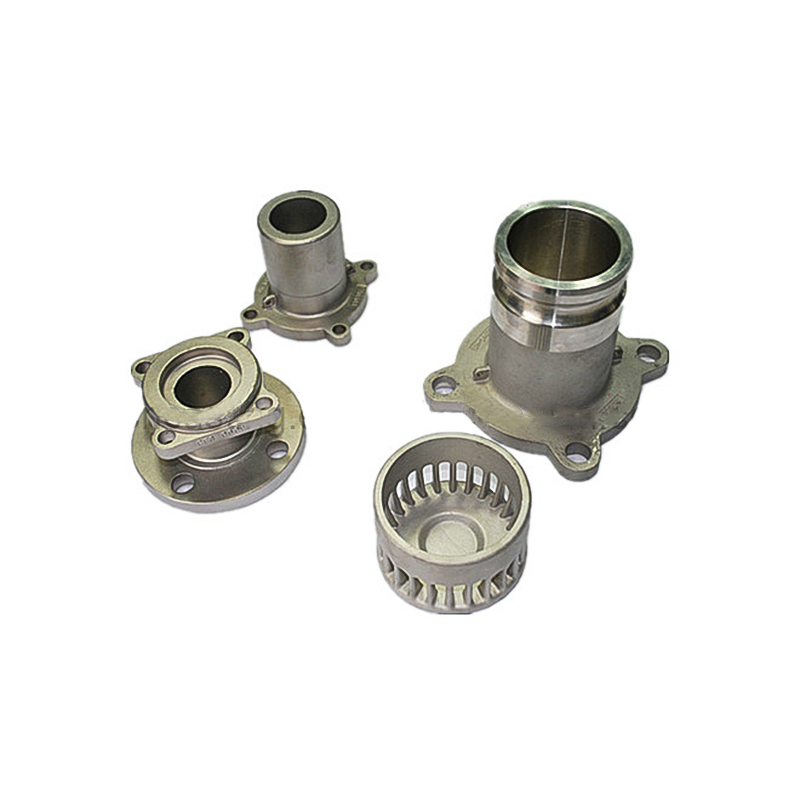 Alloy Steel Sand Casting Valve PartsCustom alloy steel valve components produced by sand casting, ideal for industrial use where moderate tolerances and surface finish are acceptable.View Product →
What Affects Sand Casting Accuracy?
Several factors determine how close a sand casting can get to the model. Knowing these helps you design a part that is easy to cast accurately, and it helps you evaluate supplier quotes.
- Sand type and binder: Green sand is soft and compressible, so it allows a little mold wall movement during solidification. Resin-bonded and sodium silicate sands are harder and maintain shape better.
- Pattern quality: A well-made pattern with correct draft, shrinkage allowance, and surface finish is the starting point for an accurate casting. Worn or poorly maintained patterns produce inconsistent parts.
- Molding method: Hand molding can be very skillful, but machine molding and automatic high-pressure molding lines give more uniform mold hardness and repeatability from one box to the next.
- Part geometry: Large flat surfaces, thick sections, narrow cores, and deep pockets all make it harder to hold tight tolerances. Dimensional accuracy tends to be better on compact, balanced shapes.
- Alloy selection: Different alloys shrink at different rates. For example, steel and cast iron behave differently from aluminum or copper alloys. Each metal also has its own solidification characteristics that influence surface quality.
- Cooling and shakeout: Uneven cooling can create warpage or internal stresses. Good gating design and controlled cooling reduce these effects.
These variables explain why two foundries may quote different tolerances for the same drawing. Process experience and careful control matter as much as the equipment.
How to Get the Accuracy You Need
For a very large share of industrial parts, sand casting accuracy is completely sufficient. A valve body, pump housing, flange shaft, or machine frame does not need the precision of a die cast electronic connector. What it needs is consistent dimensions that allow sealing, assembly, and subsequent machining to work reliably.
When your design calls for tighter control, the practical approach is to add machining allowances and finish the critical surfaces after casting. Combining sand casting with CNC machining lets us hold tolerances of ±0.02 mm or better on sealing faces, bores, and mounting points. You keep the low tooling cost and material flexibility of sand casting, while the finished part behaves like a precision-machined component.
This is a common workflow for our customers. They receive a casting with stock on selected faces, machine it in their own shop, or let us complete the machining before delivery. Either way, the accuracy of the final component is decided by the machining operation, not by the raw casting alone.
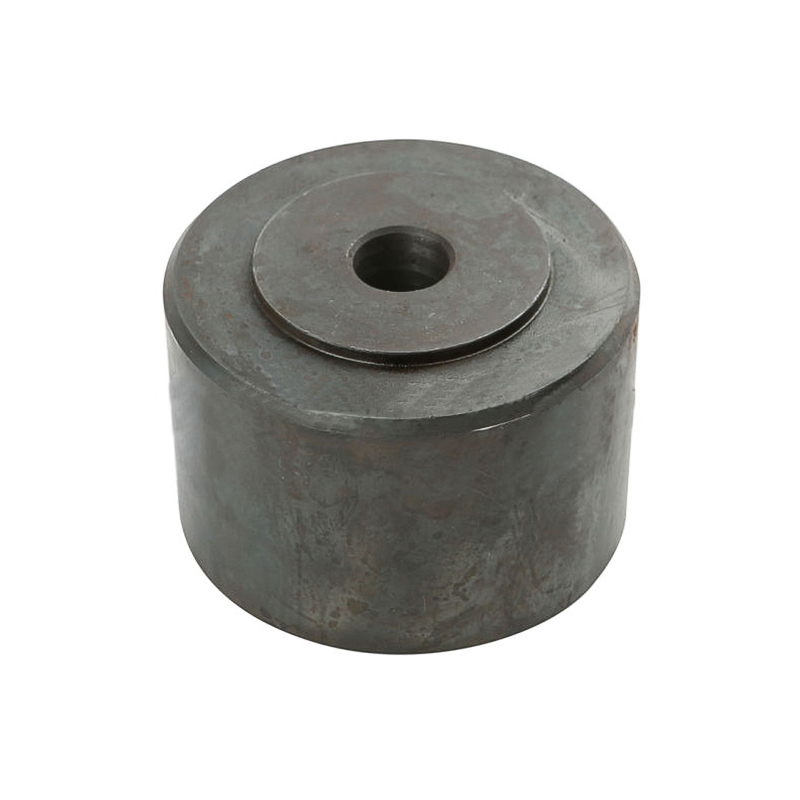 Machining Sand Casting Hydraulic CylinderSand-cast hydraulic cylinder for heavy machinery, offering linear motion via pressurized fluid. Machining options ensure final accuracy meets tight requirements.View Product →
When Is Sand Casting Accurate Enough?
Sand casting becomes the right process when you need low tooling investment, short lead time, or the freedom to use nearly any castable alloy. It is also a strong choice for large parts that are impractical for die casting, and for low-to-medium production quantities where permanent tooling would be too expensive.
In our experience, you should choose sand casting when:
- Tight tolerance is limited to a few functional surfaces that can be machined later.
- The part is large, heavy, or has a complex outer shape.
- You need steel, iron, or other alloys that are not suitable for die casting.
- Prototype or short-run quantities make tooling cost a major factor.
If almost every critical dimension must be held to ±0.1 mm or less in the as-cast state, investment casting or die casting will probably serve you better. However, if you only need tight tolerances on a few faces, sand casting plus machining is often the most economical path to a reliable part.
Our Experience with Sand Casting Accuracy
Ningbo Hansheng Machinery Parts has produced custom sand castings for customers in agriculture, automotive, mining, valve, and marine industries since 2003. Because we also run investment casting and die casting lines, we can compare processes honestly and recommend the one that fits your tolerance requirements and budget.
For sand casting, we often use sodium silicate sand for parts that need better dimensional stability than green sand can provide. We also use resin sand (no-bake) for medium and large components where surface finish and tolerance matter. In all cases, our quality system follows the pattern of first article inspection and in-process dimensional checks, so you know what to expect before we start production.
Beyond casting, we handle heat treatment, CNC machining, surface treatment, and pressure testing in our own facility. That means we can take a drawing with tight tolerances and deliver a finished casting-machined component without passing it through five different suppliers. For our customers in Europe and North America, this is a real advantage in both quality and lead time.
 Polished Sodium Silicate Sand Cast Iron RingPolished iron ring made with sodium silicate sand casting, providing good surface finish and dimensional accuracy for industrial applications.View Product →
Final Thoughts
So, how accurate is sand casting? The honest answer is: accurate enough for a very wide range of industrial applications, but not as accurate as investment casting or die casting across the board. Typical linear tolerances range from about ±0.3 mm with chemically bonded sand to ±1.5 mm with green sand, and surface finishes land between 6.3 and 25 µm Ra on the as-cast part.
The key is to design the part and specify the tolerances with the process in mind. When you do that, sand casting becomes a predictable, low-cost manufacturing method that produces dependable components. And when the application genuinely requires tighter control, adding a CNC machining step closes the gap completely.
If you have a drawing and want an honest assessment of whether sand casting will meet your tolerance needs, send it to us. We will review the geometry, recommend the best molding method, and give you realistic numbers before any tooling is cut. You can also browse our custom casting services to see examples of parts we produce for different industries.
Selected Bearing Display

Contact Information
- Tel:+86-574-88067800/88067900
- Fax:+86-574-88067400
- Phone:+86-13967874638
- E-Mail:master@nbyifei.com
Products Links
Products Links
- Agricultural Machinery Casting Parts
- Auto Casting Parts
- Brass Die Casting Parts
- Casting Bucket Tooth And Accessory
- Container Casting Parts
- Investment Casting Parts
- Machinery Casting Parts
- Mining Machinery Casting Parts
- Railway And Train Casting Parts
- Sand Casting Parts
- Stamping & Forging Parts
- Valve Casting Parts
Contact Us
Copyright ©
Ningbo Hansheng Machinery Parts Co.,Ltd. All Rights Reserved
 Custom Die Castings Manufacturers
