

 English
 Deutsch
 简体中文

Author: FTM
Date: Nov 02, 2026
How Brass Is Made: From Copper and Zinc to Cast, Forged, and Machined Parts
What Is Brass?
Brass is an alloy of copper and zinc, and the ratio between those two metals shapes nearly everything about the material: its color, strength, corrosion resistance, and machinability. Most brass alloys contain between 60 and 90 percent copper, with zinc making up the balance. Small amounts of lead, tin, aluminum, silicon, or other elements are often added to fine-tune the alloy for a specific job.
Brass is one of the most practical materials in manufacturing. It resists corrosion, conducts heat and electricity well, machines smoothly, and can be cast or forged into almost any shape. That is why you meet it in valve bodies, plumbing fittings, door hardware, marine parts, electrical terminals, and countless precision components. Understanding how brass is made helps engineers and buyers choose the right alloy and the right production route for their parts.
Raw Materials: Copper and Zinc Are Only the Start
The story of how brass is made begins with two base metals. Copper provides the strength, ductility, and corrosion resistance that make the alloy durable. Zinc lowers the melting point, adds hardness, and improves fluidity when the metal is molten. Recycled copper and brass scrap are widely used as charge materials, so the process has a strong sustainability story from the very first step.
In commercial production, the alloy usually follows a recognized specification, and the extra additions serve a clear purpose:
- Lead improves machinability by breaking chips into short segments.
- Tin enhances corrosion resistance, especially in saltwater environments.
- Aluminum adds strength and oxidation resistance.
- Arsenic or antimony helps prevent dezincification in aggressive water.
- Manganese and iron raise wear resistance in heavy-duty applications.
Melting and Alloying: Where Brass Is Born
Copper melts at 1,085°C, but zinc boils at 907°C, below the melting point of copper. That single fact drives the whole melting strategy in a brass foundry. In a typical furnace, copper is melted first. Once the copper bath is ready, zinc is added in controlled amounts, often plunged below the surface or delivered through a master alloy so it dissolves quickly instead of vaporizing. Fluxes protect the melt from oxidation, and deoxidizers such as manganese or silicon keep the metal clean and gas-free.
Historically, brass was made by the cementation process, where copper and zinc ore were heated together and zinc vapor gradually diffused into the copper. Modern foundries use direct melting instead, and the composition is verified by spectroscopy before any casting begins. The table below shows a few brass alloys commonly specified by parts manufacturers.
| Alloy | Copper % | Main Additions | Notable Feature | Typical Use |
|---|---|---|---|---|
| CZ121 (free-cutting) | 57–59 | Lead 2–3% | Excellent machinability | Precision-machined fittings |
| CZ106 (70/30 brass) | ~70 | Zinc balance | High ductility | Deep-drawn and formed parts |
| Naval brass | ~60 | Tin ~1% | Corrosion resistance | Marine hardware |
| Lead-free brass | 60–65 | Bismuth or silicon | Safe for potable water | Valves and water fittings |
Casting Brass Components
Once the composition is confirmed, brass can be formed into ingots, billets, or near-net-shape castings. For a parts manufacturer, the casting route determines the geometry, tolerance, and cost of the final component.
Die Casting
Die casting forces molten brass into a hardened steel mold at high pressure and speed. The process delivers complex shapes with tight tolerances and a smooth surface finish, making it well suited to medium and high production volumes. It is a cost-effective way to produce functional fittings, decorative hardware, handle components, and similar products. We regularly make die-cast brass parts, including crafted pieces like our brass grass hilt, where the mold reproduces fine detail consistently across every batch.
 Die Casting Grass Hilt Brass ComponentThis die-cast brass grass hilt showcases the process's ability to reproduce fine detail consistently, making it ideal for high-volume production of functional fittings and decorative hardware.View Product →
To see how melt temperature, mold design, and cycle time affect quality, our guide to brass die casting parts walks through the process in more detail.
Sand Casting
For larger brass parts or lower production volumes, sand casting is often the most economical option. Molten brass is poured into a sand mold, where it cools slowly and produces a heavier component with a coarser grain structure. Sand casting suits valve bodies, pump housings, and other substantial brass parts where cost matters more than fine surface detail.
Investment Casting
Investment casting, also called lost-wax casting, builds a ceramic shell around a wax pattern. The wax is melted out, and molten brass is poured into the cavity. The process captures intricate geometries, internal channels, and smooth surfaces that would be difficult to machine. It is the route of choice when complexity matters more than production speed.
Forging Brass for Strength and Grain Flow
Casting is not the only way to shape brass. When a part must withstand internal pressure or repeated mechanical stress, forging is often the better choice. A brass billet is heated to around 750–850°C and pressed into a closed die. The deformation refines the grain structure, closes internal porosity, and aligns the metal flow with the part's contour. The result is a dense, strong component ready for machining and further processing.
Typical forged brass parts include valve stems, threaded fittings, pipe connectors, and components for hydraulic systems. Our machinery forging brass screw nut parts, for example, are produced with closed-die forging to handle demanding mechanical loads.
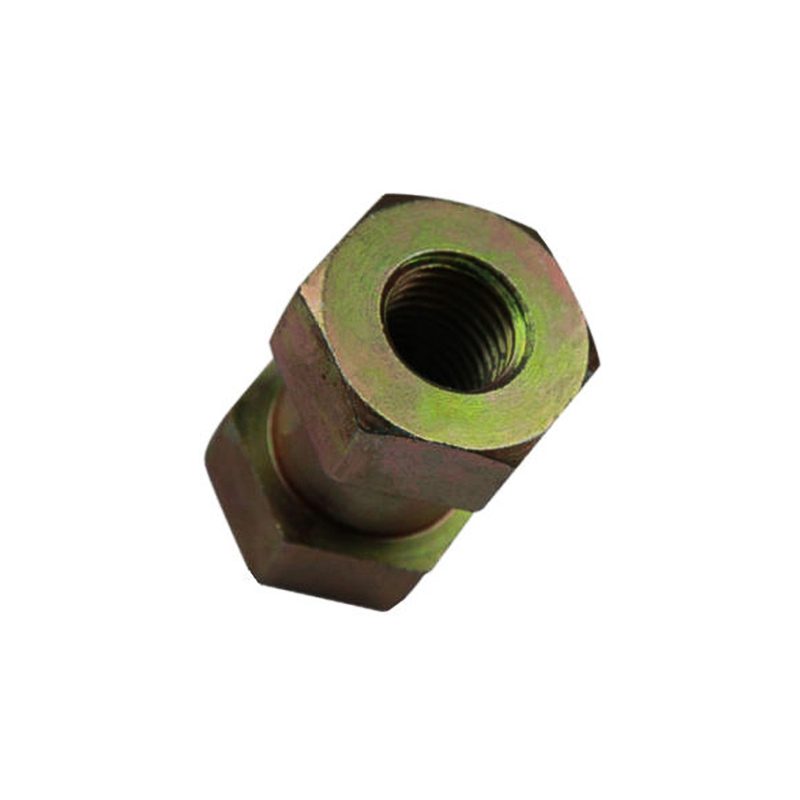 Closed-Die Forged Brass Screw Nut PartsThese forged brass screw nut parts are produced with closed-die forging for high strength and tight tolerances, suitable for demanding mechanical loads in valves and hydraulic systems.View Product →
Forged brass responds well to secondary operations as well: it can be drilled, tapped, milled, and threaded without losing its integrity.
Machining, Finishing, and Quality Control
Almost every brass component, whether cast or forged, passes through machining before delivery. Free-cutting brass alloys are ideal for CNC turning centers because they produce short chips and hold tight tolerances with relatively low tool wear. Common operations include drilling, reaming, threading, milling, and counterboring.
Surface finishing protects the appearance of brass and extends its service life. Polishing and buffing bring out the warm luster associated with architectural hardware. Tumbling removes burrs on high-volume parts. Clear lacquer or anti-tarnish coatings prevent discoloration in humid environments, and some components receive plating for specific corrosion requirements.
Quality assurance covers more than dimensions. Spectrometric analysis verifies the alloy in each heat. Casting porosity is checked on critical parts by sectioning or X-ray inspection. Pressure tests confirm leak-tightness for valve and fitting components. When these controls are in place, a brass part can deliver decades of reliable service.
Partnering with a Brass Parts Manufacturer
Brass is a forgiving material when the right process is chosen, but the decisions are interconnected: the alloy affects how the part casts and machines, the forming method affects its mechanical strength, and the finishing affects both appearance and durability. A manufacturer with hands-on experience across casting, forging, and machining can guide those decisions before a single mold is cut.
At Ningbo Hansheng Machinery Parts, we have worked with brass since 2003, die casting functional and decorative parts, forging brass nuts and fittings, and machining components to tight tolerances. We can review your drawings, recommend a process, and manage the entire route from melt to finished part under one roof. If you are researching how brass is made and want to know how your component could be produced, our engineers are glad to help.
 Brass Die-Cast Metal Crafts with CNC MachiningThis product combines die casting and CNC machining for precise, high-quality brass craft items, benefiting from induction melting for better control and consistent surface finish.View Product →
Send us your drawings or requirements through our contact page, and we will help you find the most reliable, cost-effective route for your brass parts.
Selected Bearing Display

Contact Information
- Tel:+86-574-88067800/88067900
- Fax:+86-574-88067400
- Phone:+86-13967874638
- E-Mail:master@nbyifei.com
Products Links
Products Links
- Agricultural Machinery Casting Parts
- Auto Casting Parts
- Brass Die Casting Parts
- Casting Bucket Tooth And Accessory
- Container Casting Parts
- Investment Casting Parts
- Machinery Casting Parts
- Mining Machinery Casting Parts
- Railway And Train Casting Parts
- Sand Casting Parts
- Stamping & Forging Parts
- Valve Casting Parts
Contact Us
Copyright ©
Ningbo Hansheng Machinery Parts Co.,Ltd. All Rights Reserved
 Custom Die Castings Manufacturers
