

 English
 Deutsch
 简体中文

Author: FTM
Date: Nov 19, 2026
How Do You Make Molten Aluminum? A Foundry Guide to Melting and Pouring
Molten aluminum is one of the more forgiving metals to melt, and one of the easiest to spoil. A clean bath that pours like warm syrup and a gassy, dirty bath full of oxides usually differ by only three things: dry scrap, honest temperature control, and a little patience before the pour.
We have been melting aluminum at our foundry in Ningbo since 2003, mostly for custom parts such as valve bodies, motor housings, pump components and railway fittings. The routine below is the one our melters actually use, and it holds up whether you are running a large induction furnace or a small crucible in a workshop.
Start With the Metal, Not the Furnace
Most failed melts are decided before the burner is lit. Aluminum is very sensitive to what comes along with it, so sorting the charge is the first real step, not a warm-up task.
- Keep alloy families apart. Wrought scrap such as 6061 and casting alloys such as A356 behave differently in the same pot, and mixing them gives a chemistry nobody can predict.
- Strip paint, plastic, rubber, oil and adhesive. Coatings burn into the bath and come back later as gas porosity.
- Pull out steel screws, rivets and inserts with a magnet. Iron is the quickest way to make a ductile aluminum casting brittle.
- Cut pieces small enough to sink into the melt. A large cold chunk sitting on top steals heat and slows the whole charge.
- Dry everything thoroughly. Trapped moisture in a folded can or a hollow section becomes steam under the surface, and steam under molten metal throws metal.
A puddle-first habit helps too: let the first small pieces melt into a shallow pool, then keep pushing fresh metal into that pool instead of filling the crucible to the rim in one go.
What Temperature Does Aluminum Actually Melt At?
Pure aluminum melts at about 660 °C (1220 °F). Alloys do not melt at a single number; they soften and then freeze over a range, and most casting grades are a little easier to melt than pure metal. The values we work with most often are below.
| Alloy | Melting range | Typical pouring temperature |
|---|---|---|
| Pure aluminum (99.5% and above) | 660 °C (1220 °F) | 700–720 °C (1290–1330 °F) |
| A356 casting alloy | 555–615 °C (1030–1140 °F) | 690–730 °C (1275–1345 °F) |
| 6061 wrought scrap | 580–650 °C (1080–1200 °F) | 700–750 °C (1290–1380 °F) |
| ADC12 or A380 die casting alloy | 515–580 °C (960–1075 °F) | 630–680 °C (1165–1255 °F) |
Pouring 30 to 70 °C above the liquidus is normally enough. Hotter than that and the bath absorbs more hydrogen, oxidizes faster, and above roughly 750 °C starts picking up iron from the crucible and tools. Colder than that and you get misruns and cold shuts.
Choosing a Melting Setup
Equipment should match your batch size, not your ambition. These are the three setups we see most in production:
- Gas crucible furnace, fired by propane or natural gas, is the workshop workhorse for batches of a few kilograms up to a few dozen.
- Induction furnace melts quickly and stirs the bath electromagnetically, which suits repeatable alloy control.
- Holding furnace keeps a reservoir at pouring temperature beside the casting line or the die casting machine.
Crucible choice matters more than people expect. Use clay-graphite or silicon carbide for aluminum, preheat it slowly, and give it a refractory wash so the metal does not react with the pot. Never leave a crucible empty at full heat, and never quench one.
Our Melting Routine, Step by Step
- Preheat the crucible, ladle and stirring rod to drive off any moisture.
- Charge small, dry pieces first and build a puddle at the bottom of the crucible.
- Hold the bath 20 to 30 °C above the target pouring temperature, not at full power.
- Add a cover flux once the bath is fully liquid to protect the surface from oxidation.
- Degas with a nitrogen or argon lance, or a degassing tablet if that is what you have.
- Skim the dross off gently. Do not stir it back in, and do not ladle through the crust.
- Check the temperature with a calibrated thermocouple rather than judging by color.
- Pour steadily, keep the stream short, and never let the ladle run dry into a mold.
One extra habit is worth copying: we keep a small test bar from each heat. Looking at how it solidifies tells you a lot about gas content and grain size before you commit a full mold.
Flux, Degas and Skim
Hydrogen is the quiet problem in aluminum. It dissolves into the melt and cannot escape quickly enough during solidification, so it leaves round pores behind. The higher the temperature and the damper the air, the more hydrogen you collect.
Cover flux keeps the surface from oxidizing and helps the dross stay powdery instead of turning into a heavy, metal-rich slag. Degassing then removes the hydrogen itself, either by bubbling argon or nitrogen through the bath or by using a tablet. Both need a short settling time afterwards so the bubbles can rise out.
Skimming ties it together. Pull the dross to one side with a coated tool and remove it cleanly. Every time you break the surface oxide skin, you gain a little more oxide, so the fewer passes the better.
Safety Rules We Do Not Bend
- Wear a face shield, leather apron, leggings and dry gloves, and avoid synthetic clothing near the furnace.
- Nothing wet goes near molten metal: molds, ingot molds, tools, even a damp glove.
- Do not melt sealed or unknown scrap, including cans holding liquid, aerosol bodies, batteries or zinc-plated parts.
- Ventilate the area. Coating and flux fumes are a genuine health issue, not just a smell.
- Keep dry sand or a dry powder extinguisher nearby. Water on a metal fire makes it dramatically worse.
From Molten Aluminum to a Finished Casting
In real production molten aluminum never travels far. A ladle lifts it from the furnace to the mold while it is still inside the pouring window, because a bath that sits and waits loses temperature and gains gas.
Sand casting is the most forgiving route for large or one-off shapes. If you want to see how the mold side of the job works, our notes on casting aluminum in sand walk through pattern, gating and the pour itself.
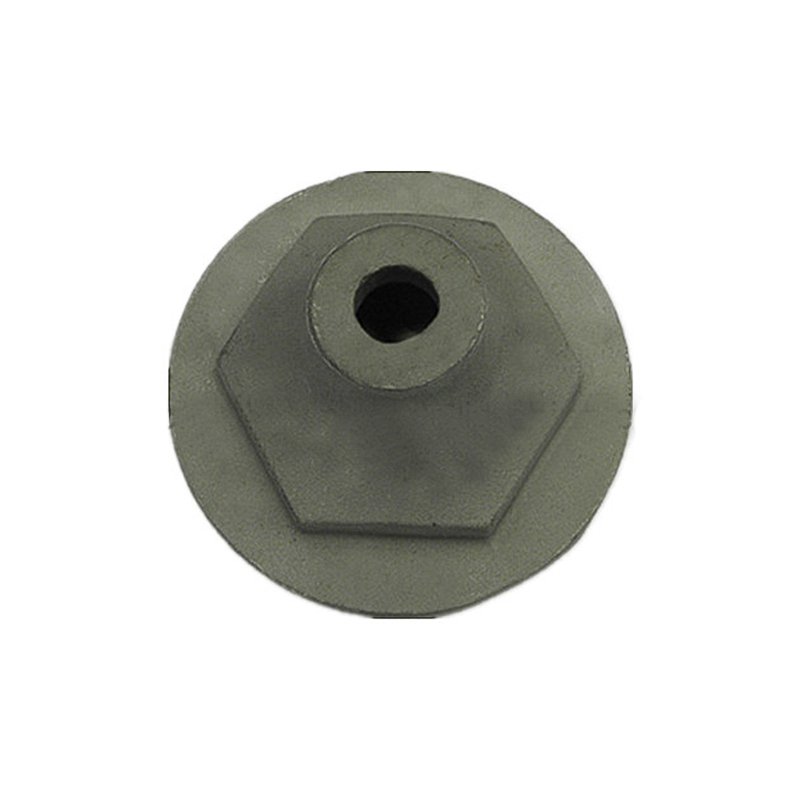
Investment casting suits thin walls and fine detail, where the ceramic shell has been preheated so the metal fills it before it freezes. A part like this aluminum investment casting cap is a good example of how thin the walls can go when the melt is clean and the shell is hot.
 Custom Aluminum Investment Casting CapCustom-manufactured aluminum cap listed under investment casting parts; it illustrates the thin-wall capability discussed around this section.View Product →
Die casting works differently again: a holding furnace keeps a large reservoir of alloy, and a shot sleeve fills the die in milliseconds. Shot weight, die temperature and cycle time are all tuned together, which is why die casting alloys are chosen for fluidity rather than for maximum strength.
After the pour comes the work that makes a casting into a part: trimming, heat treatment where needed, and machining of the faces, bores and threads that have to be accurate. Our own shop pairs casting with machining and surface finishing, so dimensions are cut after solidification, never guessed before it.
 Custom Machining Investment Casting PartsCustom investment casting with machining offered by Ningbo Hansheng; relevant where cast parts need accurate faces, bores, or threads after solidification.View Product →
Different industries then ask different things of the same metal. Rail and transport hardware has to stay light and resist vibration for years of service, which is where a precision aluminum casting with tight tolerances earns its place.
 Precision Aluminum Castings for Railway PartsCustom aluminum castings for railway manufacturing, including structural and brake components; suited to transport hardware needing tight tolerances and vibration resistance.View Product →
Questions We Hear Often
Can you melt aluminum cans at home?
Yes, with caveats. Cans are thin, heavily coated and often hold trapped moisture. Dry and crush them first, expect high oxidation losses, and remember that can metal is not a casting alloy with predictable properties.
How do you make molten aluminum without a furnace?
A propane torch and a small clay-graphite crucible will melt a few hundred grams, and a charcoal forge works for slightly more. Temperature control is poor, so treat those melts as experiments rather than production.
Why does my melt look dull and pour badly?
Usually overheating, wet scrap, or a bath that was never degassed and skimmed. Bright, clean metal and a steady pour start with dry charge material and a thermocouple.
Melting aluminum well is mostly a discipline of small habits: dry metal, measured heat, clean surface. If you would rather not repeat our early mistakes, send us your drawing with alloy, wall thickness and finishing requirements, and our team will suggest the casting route and a realistic tolerance budget.
Selected Bearing Display

Contact Information
- Tel:+86-574-88067800/88067900
- Fax:+86-574-88067400
- Phone:+86-13967874638
- E-Mail:master@nbyifei.com
Products Links
Products Links
- Agricultural Machinery Casting Parts
- Auto Casting Parts
- Brass Die Casting Parts
- Casting Bucket Tooth And Accessory
- Container Casting Parts
- Investment Casting Parts
- Machinery Casting Parts
- Mining Machinery Casting Parts
- Railway And Train Casting Parts
- Sand Casting Parts
- Stamping & Forging Parts
- Valve Casting Parts
Contact Us
Copyright ©
Ningbo Hansheng Machinery Parts Co.,Ltd. All Rights Reserved
 Custom Die Castings Manufacturers
