

 English
 Deutsch
 简体中文
简体中文
Author: FTM
Date: Jun 10, 2026
What Are CNC Machined Forgings? Processes, Benefits & Uses
What Are CNC Machined Forgings and Why Do They Matter
CNC machined forgings are metal components that are first shaped through a forging process — using compressive force to align the grain structure — and then finish-machined using computer numerical control (CNC) equipment to achieve tight dimensional tolerances and precise surface geometry. The result is a part that combines the superior mechanical strength of a forging with the dimensional accuracy of CNC machining, typically holding tolerances of ±0.005 inches or tighter depending on the application.
This two-stage process is the preferred manufacturing route for safety-critical components across aerospace, automotive, oil and gas, and defense industries. A forged and CNC-machined connecting rod, for example, can withstand cyclic fatigue loads that would fracture a cast or machined-from-bar equivalent in a fraction of the service life. If you are sourcing high-strength precision parts, CNC machined forgings deliver a strength-to-weight and performance-per-dollar ratio that no single-process alternative can match.
How the CNC Machined Forging Process Works
Understanding the full process helps buyers set realistic expectations for lead times, tolerances, and material properties. The workflow typically follows these stages:
- Die design and tooling: Engineers design closed-die or open-die tooling that defines the rough forged shape. Tooling costs typically range from $5,000 to $50,000 depending on complexity and material.
- Billet preparation: Raw material is cut to a precise weight — called a billet or slug — to ensure consistent material distribution during forging.
- Heating: The billet is heated to the correct forging temperature — for steel, typically 1,100–1,250°C (2,000–2,280°F); for aluminum, around 400–480°C (750–900°F).
- Forging: The heated billet is placed in the die and struck or pressed to shape. This aligns the metal's grain flow to follow the part's geometry, creating a continuous fibrous structure that resists stress fracture.
- Trimming and heat treatment: Flash (excess material squeezed out of the die) is trimmed off. Parts may undergo annealing, normalizing, quench-and-temper, or solution treating depending on the alloy and required mechanical properties.
- CNC machining: The forging is fixtured and machined on multi-axis CNC mills, lathes, or machining centers to produce final bores, threads, flanges, and precision surfaces. This stage removes the forging draft angles and brings the part to its engineering drawing dimensions.
- Inspection and surface finishing: Parts are measured using CMM (coordinate measuring machines), hardness tested, and may receive surface treatments such as shot peening, anodizing, or zinc phosphating.
The critical insight is that forging happens before CNC machining — the grain structure is locked in during forging, and the machining step only removes material from the surface. The core strength of the forging is never compromised by the CNC process.
Mechanical Advantages of Forgings Over Cast or Machined-from-Bar Parts
The structural superiority of forgings is not theoretical — it is measurable. The compressive deformation of forging closes internal porosity, refines grain size, and orients grain flow along stress paths. The data below illustrates typical differences between forged and cast aluminum components of equivalent alloy:
| Property | Forged (6061-T6) | Cast (A356-T6) | Machined from Bar (6061-T6) |
|---|---|---|---|
| Ultimate Tensile Strength | 310 MPa | 228 MPa | 290 MPa |
| Yield Strength | 276 MPa | 165 MPa | 241 MPa |
| Fatigue Strength (10⁷ cycles) | ~97 MPa | ~62 MPa | ~96 MPa |
| Elongation at Break | 17% | 5% | 12% |
| Internal Porosity Risk | Negligible | Moderate to High | Low |
The elongation difference is particularly significant in dynamic loading applications: forged aluminum stretches 17% before fracture versus only 5% for casting. This ductility absorbs impact energy rather than cracking suddenly — a critical safety margin in automotive suspension parts, aircraft brackets, and pressure valve bodies.
Materials Commonly Used in CNC Machined Forgings
Material selection for a CNC machined forging depends on the service environment, required strength, weight constraints, and corrosion resistance needs. The following materials represent the majority of industrial forging and machining work:
Steel Alloys
Carbon and alloy steels are the most widely forged materials. Common grades include 1045 medium carbon steel (general industrial), 4140 chromoly (high-strength shafts and gears), and 4340 nickel-chromoly (aerospace and racing applications with tensile strengths exceeding 1,800 MPa in the quenched and tempered condition). Stainless steel forgings — particularly 17-4PH and 316L — are standard in oil and gas valve bodies and food processing equipment.
Aluminum Alloys
Aluminum forgings are dominant in aerospace structural components and automotive weight-reduction programs. Alloys 2014, 2024, 6061, and 7075 are the most commonly forged and machined. A 7075-T73 forging achieves tensile strength of 503 MPa at roughly one-third the weight of steel, making it the material of choice for aircraft fuselage frames and wing spars.
Titanium Alloys
Ti-6Al-4V is the dominant titanium forging alloy, used extensively in jet engine compressor discs, orthopedic implants, and military airframe components. Titanium forgings are more challenging to CNC machine — tool wear is high and speeds are lower — but the combination of corrosion immunity, biocompatibility, and a strength-to-weight ratio exceeding most steels justifies the additional machining cost.
Nickel Superalloys
Inconel 718 and Waspaloy are forged for turbine discs, exhaust systems, and downhole drilling tools that must maintain strength above 700°C (1,292°F). CNC machining of nickel superalloy forgings requires carbide or ceramic tooling, flood coolant, and significantly reduced feed rates compared to steel machining.
Tolerances and Surface Finish Achievable with CNC Machining on Forgings
One of the primary reasons to add CNC machining to a forging is dimensional control. As-forged parts have relatively loose tolerances — typically ±0.030 to ±0.060 inches depending on part size and material — due to die wear, thermal expansion variation, and flash trimming. CNC post-machining brings critical features to engineering tolerances:
| Feature Type | As-Forged Tolerance | After CNC Machining | Surface Finish (Ra) |
|---|---|---|---|
| Bore diameter | ±0.040 in | ±0.0005 in (H7 fit) | 0.4–1.6 µm |
| Flat mating surface | ±0.030 in | ±0.002 in | 0.8–3.2 µm |
| Threaded holes | N/A (drilled post-forge) | 6H tolerance class | Per thread form |
| Overall length/width | ±0.060 in | ±0.005 in | 1.6–6.3 µm |
For bearing bores and precision fits, grinding after CNC turning can bring bore tolerances to ±0.0002 inches with surface finishes of Ra 0.2 µm or better. This level of precision is required in jet engine rotating assemblies and hydraulic actuator components.
Industries and Applications That Rely on CNC Machined Forgings
The combination of high strength, dimensional precision, and material integrity makes CNC machined forgings the default choice in several demanding sectors:
Aerospace and Defense
Virtually every structural airframe bracket, bulkhead fitting, landing gear component, and engine mount in commercial and military aircraft is a CNC machined forging. The FAA and EASA require forged construction for primary load-bearing flight structures. Typical materials are 7075 aluminum, Ti-6Al-4V titanium, and 4340 steel. A single wide-body aircraft contains over 450 individual forged and machined structural components.
Automotive and Motorsport
Connecting rods, crankshafts, wheel hubs, steering knuckles, and suspension control arms are forged and CNC machined for both OEM production vehicles and motorsport applications. Formula 1 teams use titanium-forged uprights machined to within ±0.01 mm. In production vehicles, switching from cast to forged front knuckles reduces weight by 15–25% while increasing fatigue life by a factor of three or more.
Oil, Gas, and Energy
Valve bodies, flanges, pipe fittings, and wellhead components are almost exclusively forged and CNC machined. API 6A and ASTM A182 govern most of these parts. Forging eliminates the porosity risk that could cause catastrophic pressure seal failure — in a 10,000 psi wellhead, an undetected cast void is a blowout risk that forging prevents by design.
Medical Devices
Orthopedic implants — hip stems, knee tibial trays, and spinal fusion cages — use titanium and cobalt-chrome forgings that are CNC machined to final implant geometry. The grain refinement from forging improves fatigue resistance in a load environment where the implant sees millions of loading cycles per year. FDA 21 CFR Part 820 requires full material traceability from billet to final implant.
Cost Structure of CNC Machined Forgings: What Drives the Price
CNC machined forgings cost more per unit than cast or machined-from-bar equivalents at low volumes, but the cost dynamics shift significantly at scale. Understanding the cost drivers helps buyers make informed sourcing decisions:
- Tooling (dies): The largest upfront cost, ranging from $5,000 for simple aluminum forgings to $100,000+ for complex steel dies. Dies amortize over production volume — typically justified above 500–1,000 pieces per year.
- Material: Billet input costs vary widely — 6061 aluminum runs approximately $2–3/lb, 4140 steel $0.80–1.50/lb, and Ti-6Al-4V titanium $15–25/lb. Forgings use near-net-shape billets with less input material waste than machining from solid bar.
- Forging labor and press time: Determined by part complexity, number of forging blows, and heating cycles required.
- CNC machining time: The dominant variable cost per part. A complex forging requiring 5-axis machining, multiple setups, and tight tolerances may have machining costs of $50–$500 per piece depending on cycle time.
- Heat treatment: Adds $1–$10 per part for aluminum; significantly more for vacuum heat treatment of titanium or nickel alloys.
- Inspection and certification: CMM inspection, material certs, and non-destructive testing (ultrasonic or magnetic particle) add cost but are non-negotiable for aerospace and medical parts.
At high volumes, forging's near-net-shape efficiency reduces material waste to 5–15% scrap versus 40–60% for machining from solid billet, which more than offsets the die investment and makes CNC machined forgings the lowest total-cost option for large production runs.
How to Specify and Source CNC Machined Forgings
Getting the specification right before approaching a forge-and-machine supplier saves significant time and cost. A complete specification package should include:
- Engineering drawing with GD&T: Define all critical dimensions with tolerances, surface finish callouts, and datum references. Distinguish which features are forged-net and which require CNC machining.
- Material specification: Call out alloy, temper, and applicable standard (e.g., AMS 2770 for aluminum heat treatment, ASTM A668 for steel forgings).
- Mechanical property requirements: Specify minimum tensile strength, yield strength, hardness, and impact values. State whether these are per lot testing or per-piece certification.
- Grain flow direction: For highly loaded parts, specify which axis should align with forging grain flow to maximize fatigue resistance.
- NDT and inspection requirements: Define required inspection methods — ultrasonic testing (UT), magnetic particle inspection (MPI), dye penetrant (PT) — and acceptance criteria per applicable standards.
- Annual volume and delivery cadence: This information directly determines whether closed-die or open-die forging is economical and what lead times are realistic.
Lead times for new CNC machined forgings typically run 10–20 weeks for the first article (including die fabrication, forging trial, machining, and inspection), with repeat production orders fulfillable in 6–12 weeks. Engaging the forging supplier early in the design phase — before the drawing is finalized — often reduces die cost by 20–30% through geometry optimization for forgability.
CNC Machined Forgings vs. Alternative Manufacturing Routes
For buyers evaluating manufacturing options, the following comparison clarifies where CNC machined forgings have clear advantages and where other processes may be more appropriate:
| Process | Strength | Dimensional Precision | Tooling Cost | Best For |
|---|---|---|---|---|
| CNC Machined Forging | Excellent | Excellent | High | High-volume, safety-critical parts |
| CNC Machined Casting | Moderate | Good | Moderate | Complex geometry, medium loads |
| Machined from Bar Stock | Good | Excellent | None | Prototypes, low volume, simple shapes |
| Metal Additive (3D Print) | Moderate | Good | None–Moderate | Very complex internal geometry, low volume |
| Powder Metal (PM) + Machining | Good | Good | High | High-volume near-net-shape parts |
The key takeaway is that CNC machined forgings are unmatched when both strength and precision are mandatory. For low-volume prototypes or complex internal geometries, machined bar stock or additive manufacturing may be more practical. But once volume exceeds several hundred pieces per year and the application involves fatigue loading, impact, or pressure containment, the forging route becomes both the safest and most cost-effective choice.
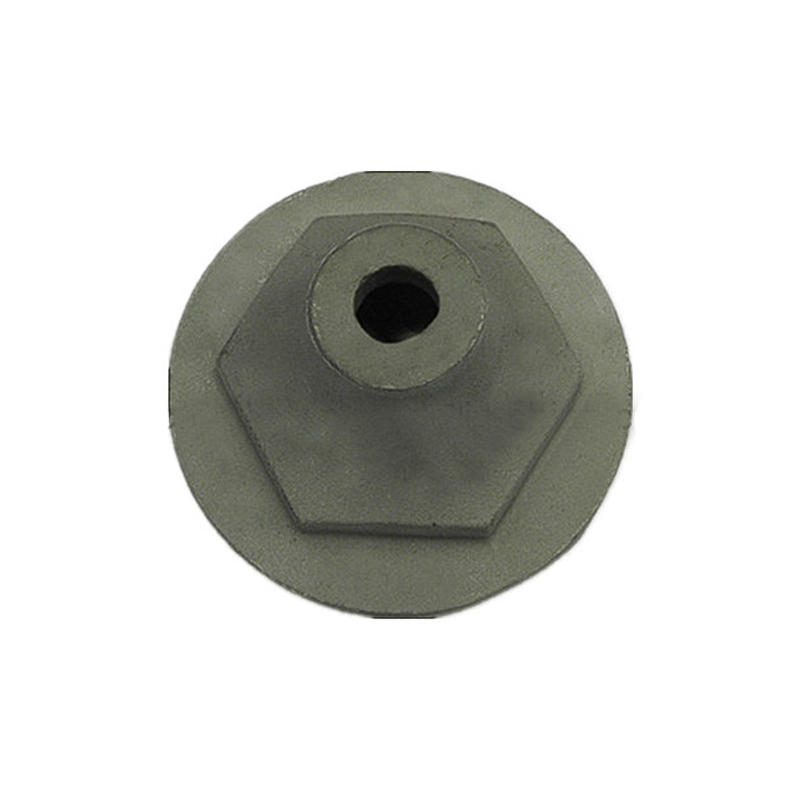
Selected Bearing Display

Contact Information
- Tel:+86-574-88067800/88067900
- Fax:+86-574-88067400
- Phone:+86-13967874638
- E-Mail:master@nbyifei.com
Products Links
Products Links
- Agricultural Machinery Casting Parts
- Auto Casting Parts
- Brass Die Casting Parts
- Casting Bucket Tooth And Accessory
- Container Casting Parts
- Investment Casting Parts
- Machinery Casting Parts
- Mining Machinery Casting Parts
- Railway And Train Casting Parts
- Sand Casting Parts
- Stamping & Forging Parts
- Valve Casting Parts
Contact Us
Copyright ©
Ningbo Hansheng Machinery Parts Co.,Ltd. All Rights Reserved
 Custom Die Castings Manufacturers
