

 English
 Deutsch
 简体中文
简体中文
Author: FTM
Date: Aug 19, 2026
Mining Machinery Casting Parts Guide: Materials, Processes, Quality & Procurement
A 55-ton excavator at a hard-rock quarry loses a bucket tooth during the second shift. The operator feels the digging force drop, the maintenance crew spends forty-five minutes replacing the tooth, and the shift target slips. When this repeats across several machines, unplanned stops become a serious cost. The usual cause is not bad luck but a casting part selected without matching the material and manufacturing process to the actual duty.
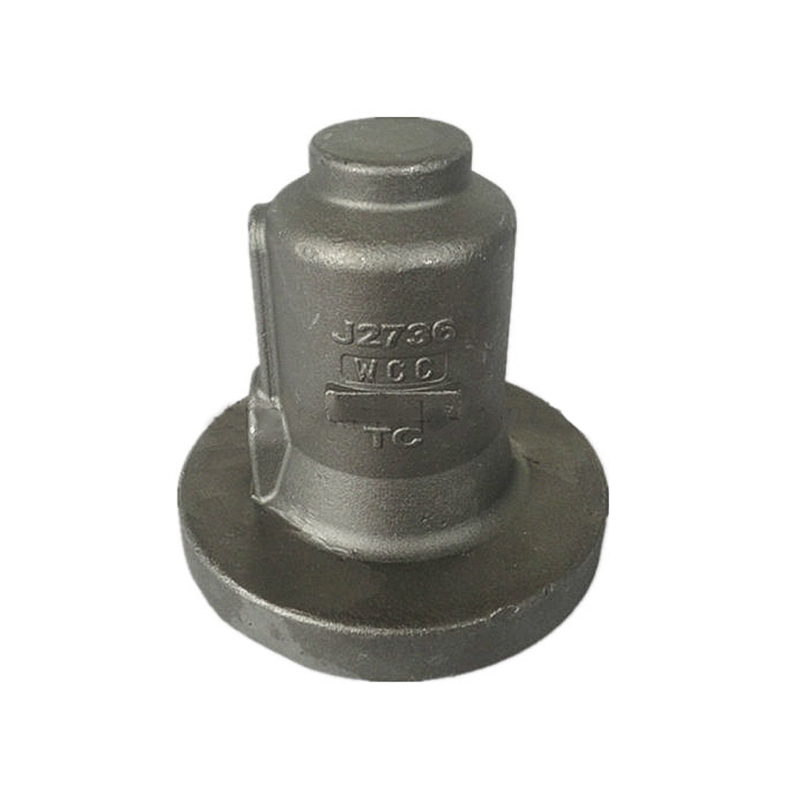
Mining machinery casting parts, from bucket teeth and adapters to wear liners, pump housings and gearbox casings, are not commodity items. Alloy chemistry, microstructure, heat treatment and machining accuracy decide how long a machine stays productive and what each operating hour costs. This guide covers the main types of cast parts, the processes used to make them, the materials that perform best and the supplier qualifications to check before ordering.
Why Mining Machinery Casting Parts Are the Backbone of Equipment Reliability
Mining equipment operates under some of the most severe loading conditions in industry. Abrasive ore, falling rock, high-pressure hydraulics and vibration attack the same surfaces every shift. Cast parts absorb much of this punishment because casting allows the geometry to follow the load path and the material to match the wear mechanism.
The conclusion is simple: evaluate castings by cost per operating hour, not purchase price. A bucket tooth that costs 20 percent more but lasts twice as long lowers the total cost per tonne excavated. The same logic applies to crusher liners, pump bodies and valve parts.
Castings are also structural. Gearbox housings hold bearing alignment, pump bodies contain high pressure, and adapters transfer digging force into the bucket lip without cracking. That is why internal quality, including porosity, shrinkage, inclusions and hidden cracks, matters as much as dimensional tolerance.
Key Types of Mining Machinery Casting Parts and Their Functions
Different types of cast parts fail in different ways. Understanding the failure mode narrows the material and process choices before you compare quotations.
| Part family | Application | Typical material | Main failure mode |
|---|---|---|---|
| Bucket teeth and adapters | Excavator and loader buckets | Manganese steel, low-alloy steel | Abrasive wear, impact fracture |
| Wear liners and crusher parts | Crushers, chutes, hoppers | High-chromium iron, alloy steel | Abrasion, erosion |
| Pump and valve bodies | Slurry systems, hydraulic circuits | Ductile iron, cast steel, stainless steel | Cavitation, corrosion |
| Gearbox and motor housings | Conveyor drives, winch drives | Cast iron, ductile iron | Fatigue cracking, distortion |
| Impellers and wear rings | Slurry pumps, mill circuits | High-chromium iron, stainless steel | Abrasive wear, corrosion |
Bucket teeth and adapters are the most visible category because they contact the ground directly. The adapter transfers digging force from the tooth into the bucket lip, while the tooth is a replaceable tip designed to wear sacrificially. If tooth and adapter do not fit correctly, movement at the interface accelerates wear and can crack the adapter. Ordering casting bucket adapters for excavator buckets and the matching teeth from the same foundry avoids the fit problems that appear when components come from different sources.
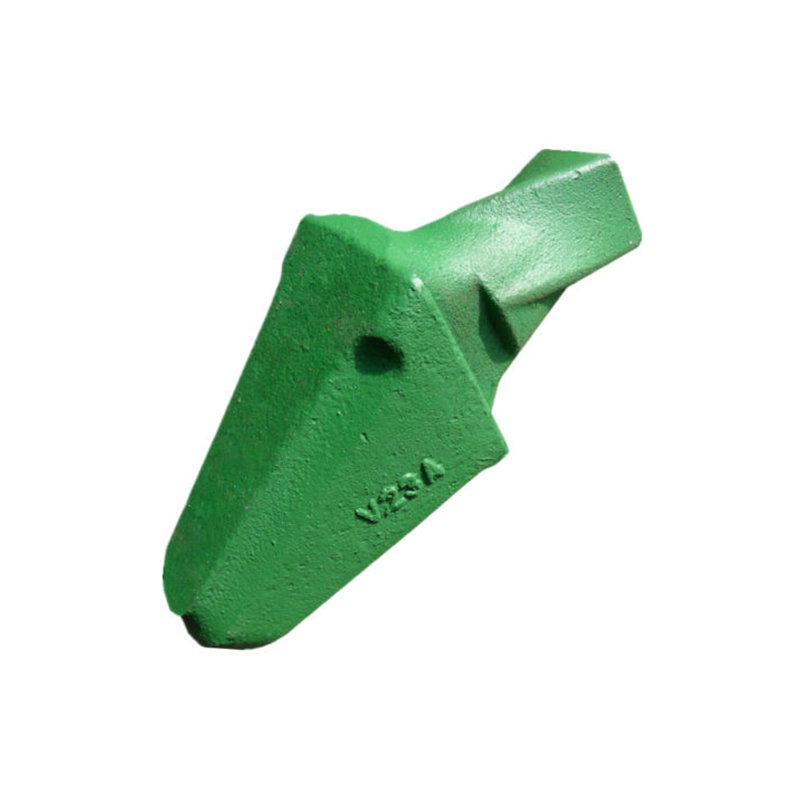 Custom Casting Bucket Adapters for Bucket Teeth Manufacturers, Factory - Ningbo Ningbo Hansheng Machinery Parts Co.,Ltd. is China custom Casting Bucket Adapters for Bucket Teeth manufacturers and Casting Bucket Adapte...View Product →
Wear liners and crusher parts protect expensive equipment from abrasive ore. High-chromium iron offers excellent sliding abrasion resistance but limited toughness, while manganese steel work-hardens under impact and keeps a ductile core. The right material depends on whether the dominant mechanism is abrasion or high-energy impact.
Pump and valve bodies face erosion, corrosion and pressure. Internal porosity in a valve body can leak under pressure and stop a hydraulic circuit. For these parts, process control and inspection matter as much as the material grade.
Casting Processes Used for Mining Machinery Parts
The casting process sets the limits on geometry, tolerance, surface finish and cost. Three routes cover most mining machinery parts, and almost every casting needs some machining afterwards.
Sand Casting for Large and Robust Parts
Sand casting is the most flexible and economical route for large housings, frames and simple wear parts. Moulds are made from bonded sand, the process accepts a wide range of materials, and component weight can range from a few kilograms to several tonnes. Tolerances are moderate, so critical faces usually need machining. It suits one-off replacement parts and production batches.
Investment Casting for Complex and Tight-Tolerance Parts
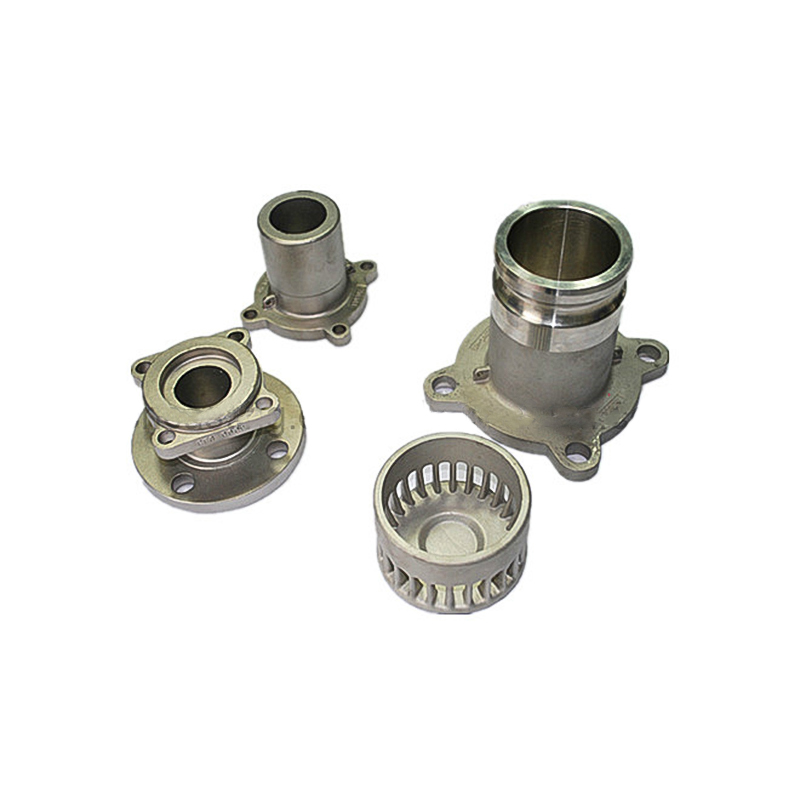
Investment casting, also called lost-wax casting, uses a ceramic shell built around a wax pattern. It produces near-net-shape parts with complex passages, smoother surfaces and tighter dimensional control than sand casting. Mining applications include adapters, connectors, small housings and parts with geometry that would be difficult to machine. The process also controls alloy composition precisely, which keeps hardness consistent from batch to batch.
Machining After Casting for Precision Interfaces
Few castings are used exactly as cast. Mounting faces, bores, threads and sealing surfaces need CNC machining to meet the tolerances of modern equipment. Lead time and quality risk both drop when casting and machining are coordinated in one facility. For example, our alloy steel mining machinery parts finished with CNC machining combine the near-net shape of a casting with the functional accuracy of machining.
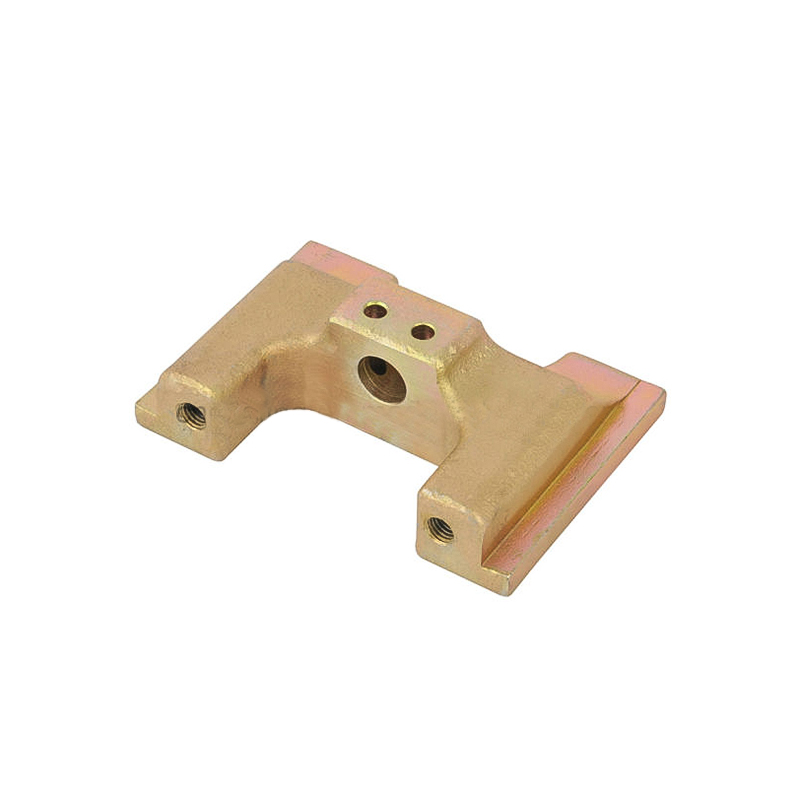 Custom Alloy Steel Machining Part/Mining Machinery Parts/Construction Machinery Ningbo Hansheng Machinery Parts Co.,Ltd. is China custom Alloy Steel Machining Part/Mining Machinery Parts/Construction Machinery Accesso...View Product →
Forging for Selected High-Impact Components
Casting is not always the best route. Components carrying high tensile stress and repeated impact, such as heavy shafts, gears and some structural parts, benefit from forging because the grain structure follows the load path. Many mining equipment builders combine cast wear parts with forged mining and construction machinery parts for structural elements. A supplier with both processes can recommend the more economical route instead of promoting a single method.
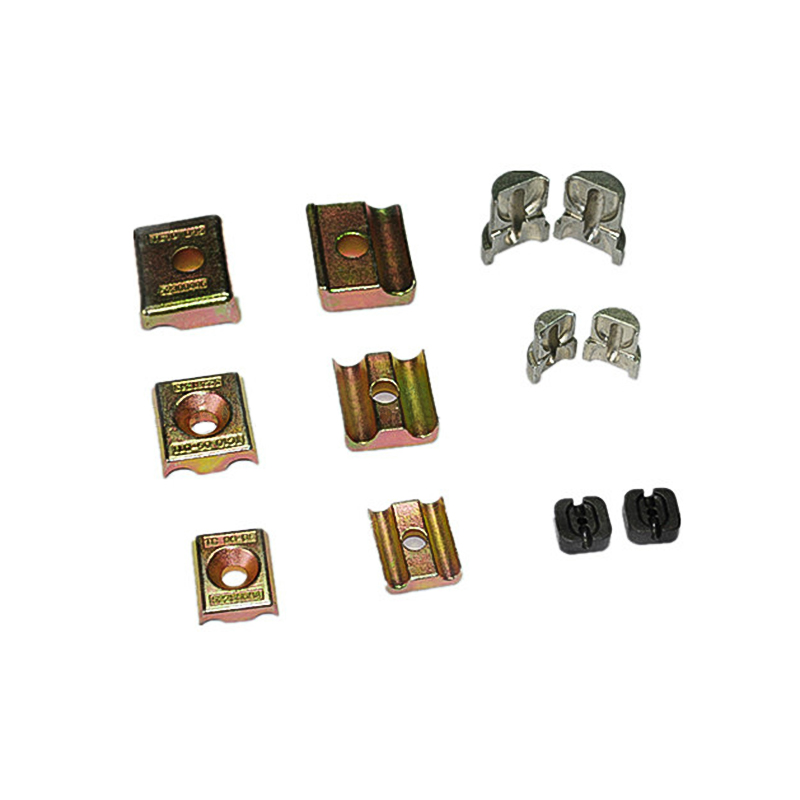 Custom Mining And Construction Machinery Parts by Forging Manufacturers, FactoryNingbo Hansheng Machinery Parts Co.,Ltd. is China custom Mining And Construction Machinery Parts by Forging manufacturers and Mining And ...View Product →
Materials That Determine Wear Life and Reliability
After the process, material grade is the largest factor in service life. Matching the material to the wear mechanism is more valuable than simply asking for a hard grade.
| Material | Key characteristics | Typical parts |
|---|---|---|
| Austenitic manganese steel | Work-hardens under impact, high toughness | Bucket teeth, crusher jaws, grizzly bars |
| Low-alloy steel (30CrMo, 42CrMo) | High strength, good fatigue resistance after quench and temper | Adapters, gears, structural castings |
| High-chromium cast iron | Very high abrasion resistance, lower toughness | Wear liners, impellers, hammer tips |
| Ductile iron | Good strength, machinability and impact resistance | Pump housings, brackets, gearboxes |
| Stainless steel | Corrosion resistance with useful wear performance | Valve bodies, slurry handling parts |
Two examples explain the logic. In a crusher jaw, austenitic manganese steel is standard because each impact work-hardens the surface while the core stays tough and crack-resistant. In a slurry pump impeller, fine-particle abrasion dominates, so high-chromium iron is usually preferred even though it is more brittle. The wrong material family shortens life and can endanger adjacent components.
Heat treatment finalises the properties. Quenching and tempering hardens low-alloy steel castings, water quenching develops manganese steel work-hardening potential, and annealing improves cast iron machinability. A reliable supplier states the heat treatment specification and verifies hardness on finished parts.
How to Select Mining Machinery Casting Parts
Selecting the right part is not just matching a drawing. It means matching the alloy to the wear mechanism, the process to the geometry and the supplier to the quality evidence you need.
- Define the operating conditions. Record rock type, impact energy, abrasiveness, moisture, temperature and any corrosive media.
- Specify the material grade with the foundry. Agree on the chemical composition range and target hardness instead of using a vague description like wear-resistant steel.
- Identify critical dimensions. Mark the bores, faces and threads that need machining, and state the tolerances that affect assembly.
- Request inspection evidence. Chemical analysis, hardness tests, dimensional reports and non-destructive testing for internal defects should be part of the delivery package.
- Plan stock and lead time. Bucket teeth and liners are consumables, so a reliable lead time can be worth more than a low unit price.
- Review the quality system. ISO-certified processes, material traceability and consistent documentation reduce the risk of field failure.
The same checklist applies across heavy industry. When buying parts for a new machine or changing suppliers, the key selection considerations for heavy-duty machinery parts can help you structure the enquiry and compare offers on the same basis.
What to Look for in a Casting Supplier for Mining Equipment
Supplier capability matters as much as the part itself. Mining operations cannot afford trial and error, so the foundry must hold quality across batches and years.
- Process coverage in one plant: tooling, casting, heat treatment, machining and surface treatment reduce hand-offs and speed up problem solving.
- A documented quality system: ISO certification, internal procedures and inspection reports that you can audit.
- Export experience: a supplier that regularly ships to North American and European customers understands the documentation, packaging and communication requirements of international projects.
- Engineering support: the supplier should comment on castability, suggest material improvements and propose design changes before tooling is made.
- Flexible batch sizes: mining companies need both small replacement quantities and larger production runs.
Well-designed components have a direct effect on uptime. Industry examples show that mining machinery casting parts can significantly improve uptime by reducing maintenance intervals. A foundry that has already solved similar problems in mining and construction machinery can usually identify risks in your part before you do.
The practical conclusion is straightforward. Specify mining machinery casting parts with the same discipline as any engineered component: define the duty, select the material and process, verify the quality evidence and work with a manufacturer that casts, machines and inspects under one roof. That approach lowers the cost per operating hour and keeps equipment available.
A manufacturer such as Ningbo Hansheng Machinery Parts Co., Ltd. fits that profile. Based in Ningbo, China, it is an export-oriented foundry and forge with casting, forging, CNC machining and surface treatment in a single facility. Whether you need cast bucket teeth, machined adapters or forged structural components, one accountable partner simplifies procurement and reduces the hidden costs of cheap castings.
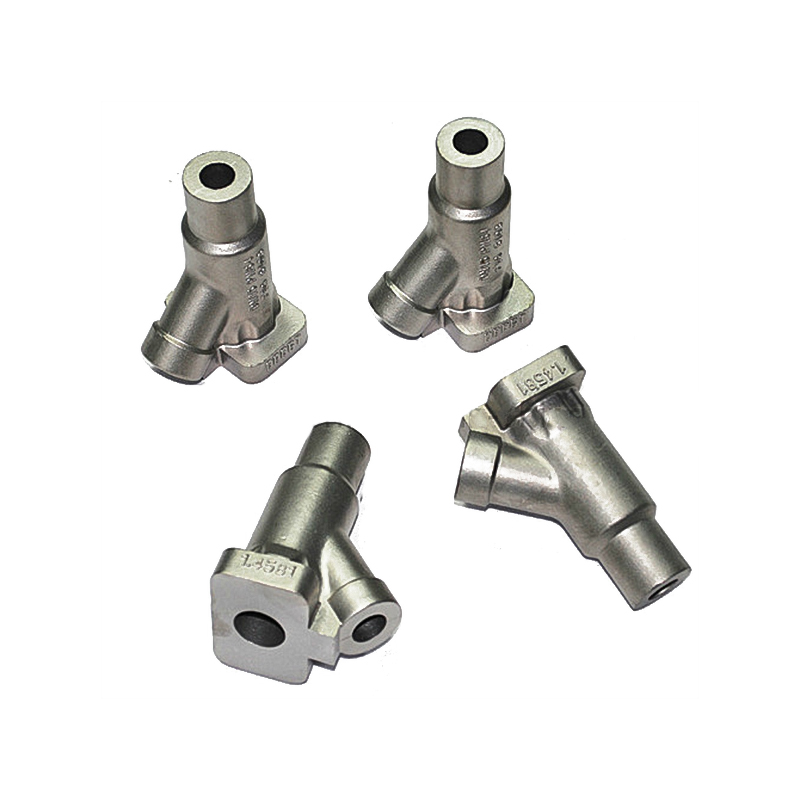
Selected Bearing Display

Contact Information
- Tel:+86-574-88067800/88067900
- Fax:+86-574-88067400
- Phone:+86-13967874638
- E-Mail:master@nbyifei.com
Products Links
Products Links
- Agricultural Machinery Casting Parts
- Auto Casting Parts
- Brass Die Casting Parts
- Casting Bucket Tooth And Accessory
- Container Casting Parts
- Investment Casting Parts
- Machinery Casting Parts
- Mining Machinery Casting Parts
- Railway And Train Casting Parts
- Sand Casting Parts
- Stamping & Forging Parts
- Valve Casting Parts
Contact Us
Copyright ©
Ningbo Hansheng Machinery Parts Co.,Ltd. All Rights Reserved
 Custom Die Castings Manufacturers
